







The Way of St James – Pilgrimage for Beginners
Original report «Pilgrimage for Beginners» first published in: «Sonntagszeitung», 15 March 2020.
Text: Christoph Ammann / Sonntagszeitung
There is not an exhausted pilgrim in sight, and the coach tourists keep to themselves: one by one they step up to the wall of the former monastery, turn the tap and fill a plastic cup with red grape juice. The wine fountain is not one of the miracles of the Way of St James; it is a marketing gimmick by the Bodegas Irache near Ayegui in the Spanish province of Navarre.
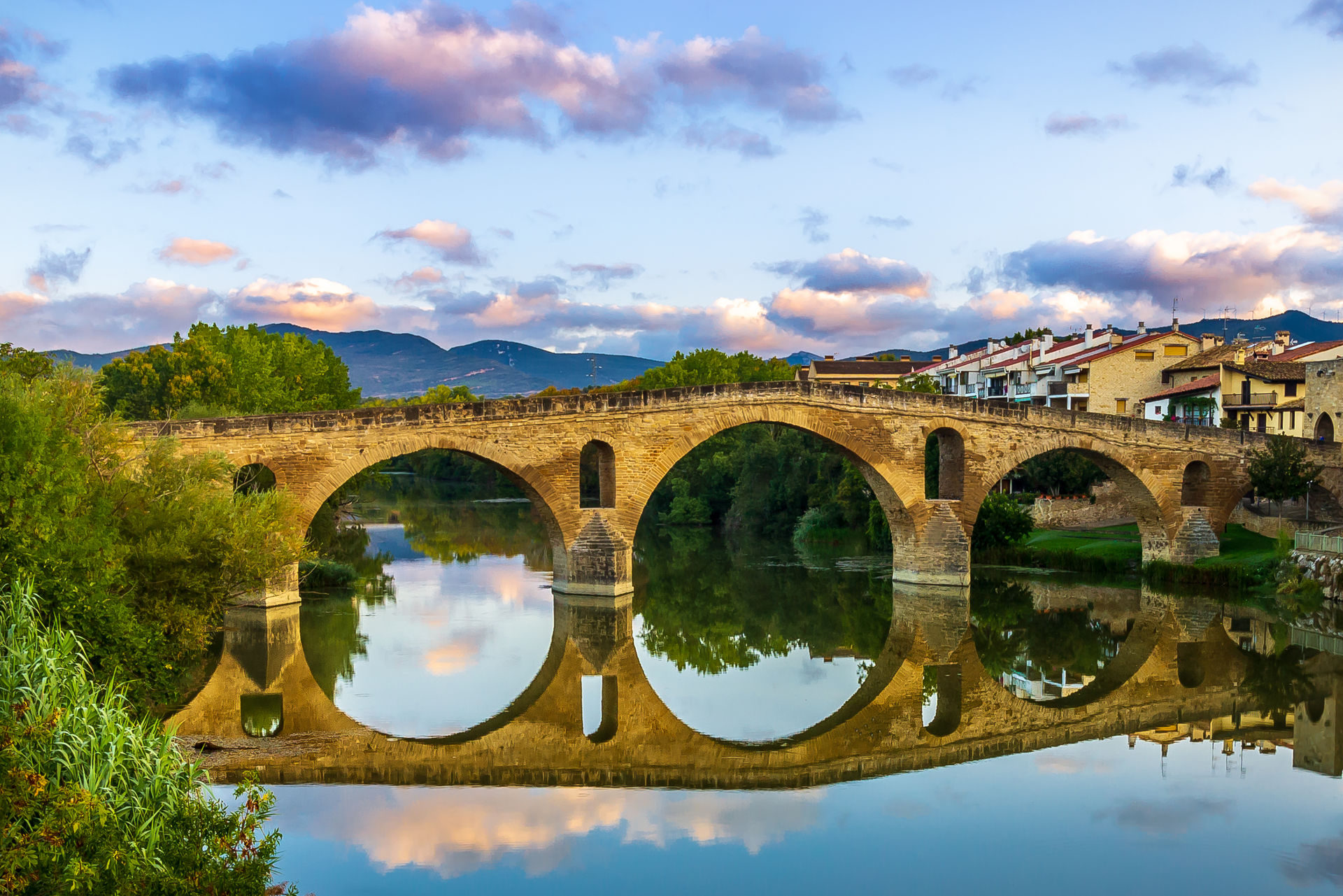
From the winery it is only a stone's throw to the «French» Way of St James, the Camino Francés. Whether the coach passengers have earned a drink in the middle of the day is a matter of opinion: unlike real pilgrims, we have not been on the road since six in the morning, after a night in a bare dormitory, at the mercy of wind, weather and a blazing sun. No, the Swiss, most of them well on in years, have simply left the comfortable leather seat of the coach for a few kilometres. Driver Urs Zingg has unloaded the walking gear from the belly of his spotless vehicle, set up folding seats for changing shoes and waved the group off towards Puente la Reina. Here the Way of St James leads through fields of artichokes, peppers and tomatoes, over easy terrain and, again and again, through shady stretches of woodland. And we are not troubled by the worry of having to make do, like pilgrims of old, with a sleeping place in the gallery of the church of Puente la Reina under the eyes of the Virgin of Rosario. After all, tour operator Eurobus has reserved the hotel rooms in the stage town of Burgos. This is a very comfortable way to experience the Spanish section of the Way of St James.
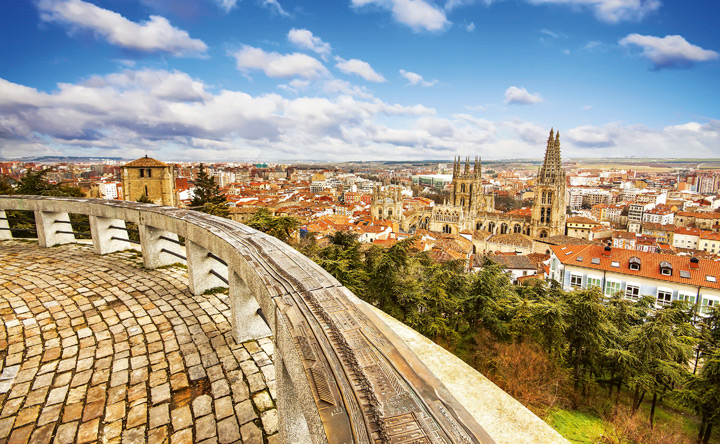
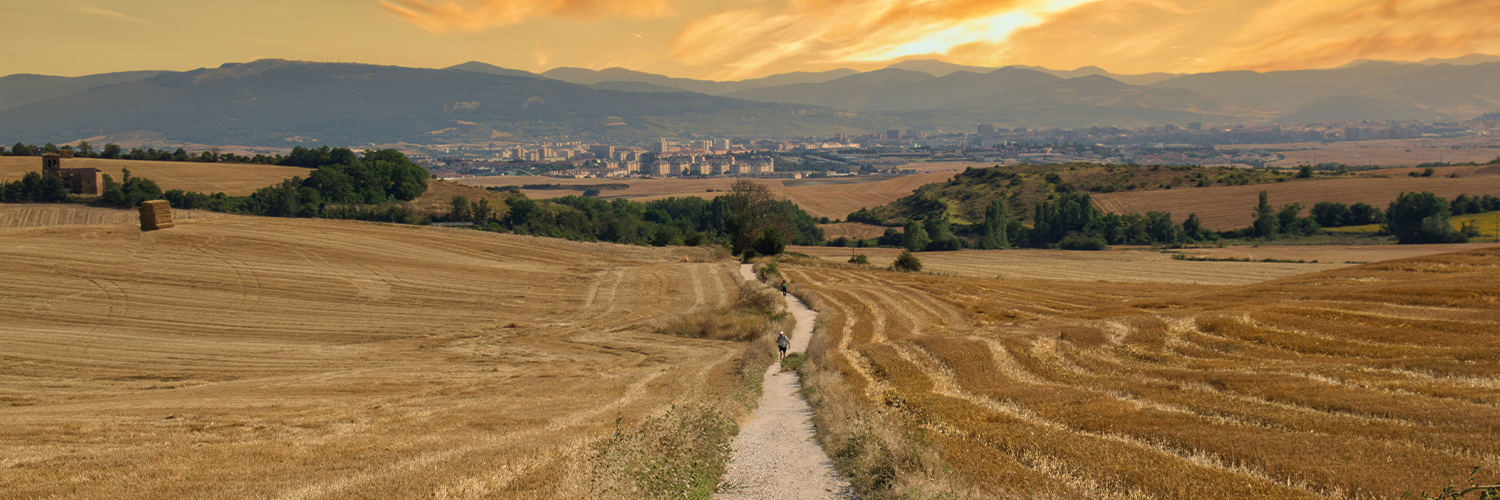
From the coach window we watch the pilgrims trudge across bare plateaus and pre-Alpine terrain. The unattractive stretches of the Camino alongside busy main roads are not up for discussion. That a few more demanding sections on narrow, stony paths are still to come is part of the adventure for walkers out of their comfort zone.
As we cover only a fraction of the Spanish route, which is over 600 kilometres long, on foot, we consider ourselves at most pilgrims lite, yet we are right in the thick of it – for instance in the cathedral of Santo Domingo de la Calzada, where a crowd of the faithful devoutly admires two roosters behind ornately wrought iron bars.
Three metres above the church floor, the birds bear witness to the Miracle of the Hens of Santo Domingo – a medieval legend that circulates in variations throughout the Western world. Roast chickens are the protagonists, which turn into living poultry in the face of human failings. The roosters on duty in Santo Domingo doze away instead of delighting the pilgrims. A lusty crow meant good luck on the long road to Santiago.
A joker imitates the cock-a-doodle-doo of the rooster with uncanny accuracy, whereupon a medieval pilgrim bursts into tears of emotion. As everywhere along the Way of St James, the souvenir business is thriving. In Santo Domingo, ceramic chickens await, preferably in the kit of the footballers of Barcelona, Atletico Bilbao or Eibar.
As a rule, the coach pilgrims look around the stage towns such as Burgos or León in the morning. They set off on foot only when the true disciples of James are already on the ropes. Long-distance walkers and pleasure travellers meet at the Albergue Nuestra Señora del Pilar in Rabanal del Camino, run energetically by Isabella Pilar for a quarter of a century.
In the courtyard, young Korean women cool their burning feet in buckets of water; in the dormitory, guests in search of meaning lie like dead flies on the 32 beds, dozing, reading or fiddling with their smartphones, their hiking clothes hanging on hooks. A night in your own sleeping bag costs five euros, the hearty lunch seven: salad, tuna pâté, tortilla, plus water and house wine. Isabella has lovingly decorated the pilgrims' hostel with historic pictures and mule harness.
In spring and autumn all 71 beds are taken. Fortunately her niece from Bern is visiting and lends a hand in the kitchen. Her two little daughters, one of them called Greta, have to keep themselves entertained. All pilgrim hostels are marked with the typical scallop shell.
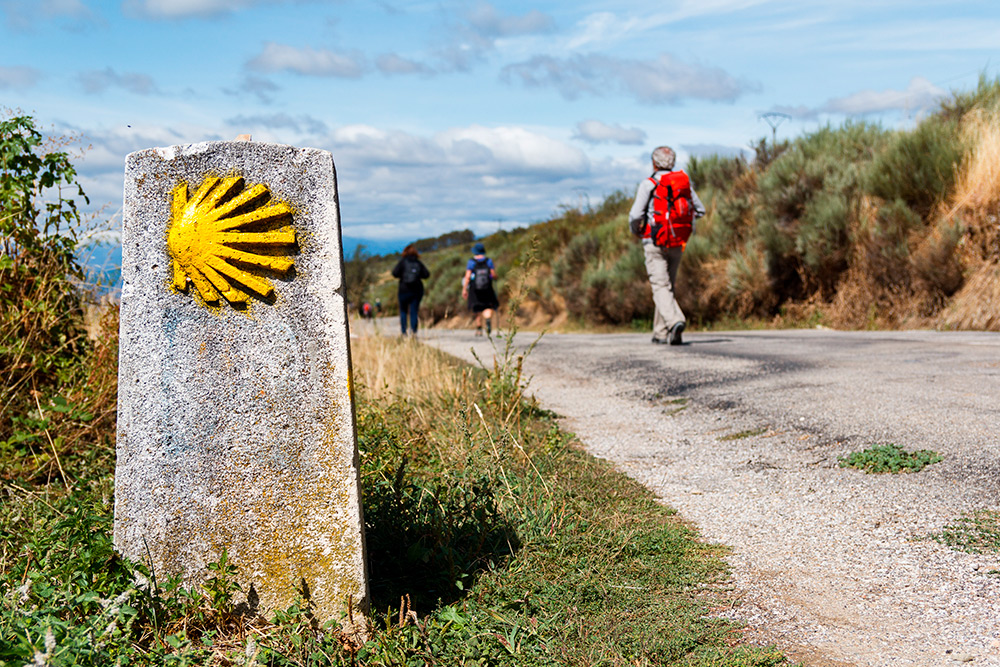
José López is partly responsible for the fact that the Camino Francés sees 330,000 pilgrims a year: «From 1978 I regularly accompanied the priest Elías Valiña Sampedro for seven years on his search for the old Way of St James. We marked the route every ten kilometres with the yellow arrow, which today, alongside the scallop shell, is its emblem.» As a boy, José López chose the colour of the now world-famous arrow: sunflower yellow. «The government in Madrid had no idea about the Way of St James back then,» López recalls. «Pilgrimage had gone out of fashion, and Don Elías had to fight for permission to mark the route.» Today José López benefits directly from the revival of the Way of St James. In O Cebreiro he runs pilgrim hostels and a souvenir shop with a café. «Without the Camino our village at 1,300 metres above sea level would be dead,» says the entrepreneur.
Erdinger wheat beer beside devout pilgrims
After all, O Cebreiro in eastern Galicia is home to the oldest sacred building on the Way of St James, the early Romanesque church of Santa Maria la Real. Inside, 300 candles flicker, and pilgrims pray and commemorate the Eucharistic miracle said to have taken place here in 1300: a doubting monk mocked the only visitor to Mass, who had come to the church through snow and storm, whereupon bread and wine turned into flesh and blood.
The closer you get to Santiago de Compostela, the busier the Way of St James becomes. In the eucalyptus forest of Melide, Lourdes sells figs and Fanta from a stall, but also raspberry schnapps. Alcohol is popular with the groups of rowdy Spanish men who turn the path of inner reflection into a party mile on the final stages. The tables outside the El Aleman restaurant are well occupied. Erdinger wheat beer flows, but the owner, Josef, born in Stuttgart, assures us he does not serve German bratwurst: «With me there is only Galician food.»
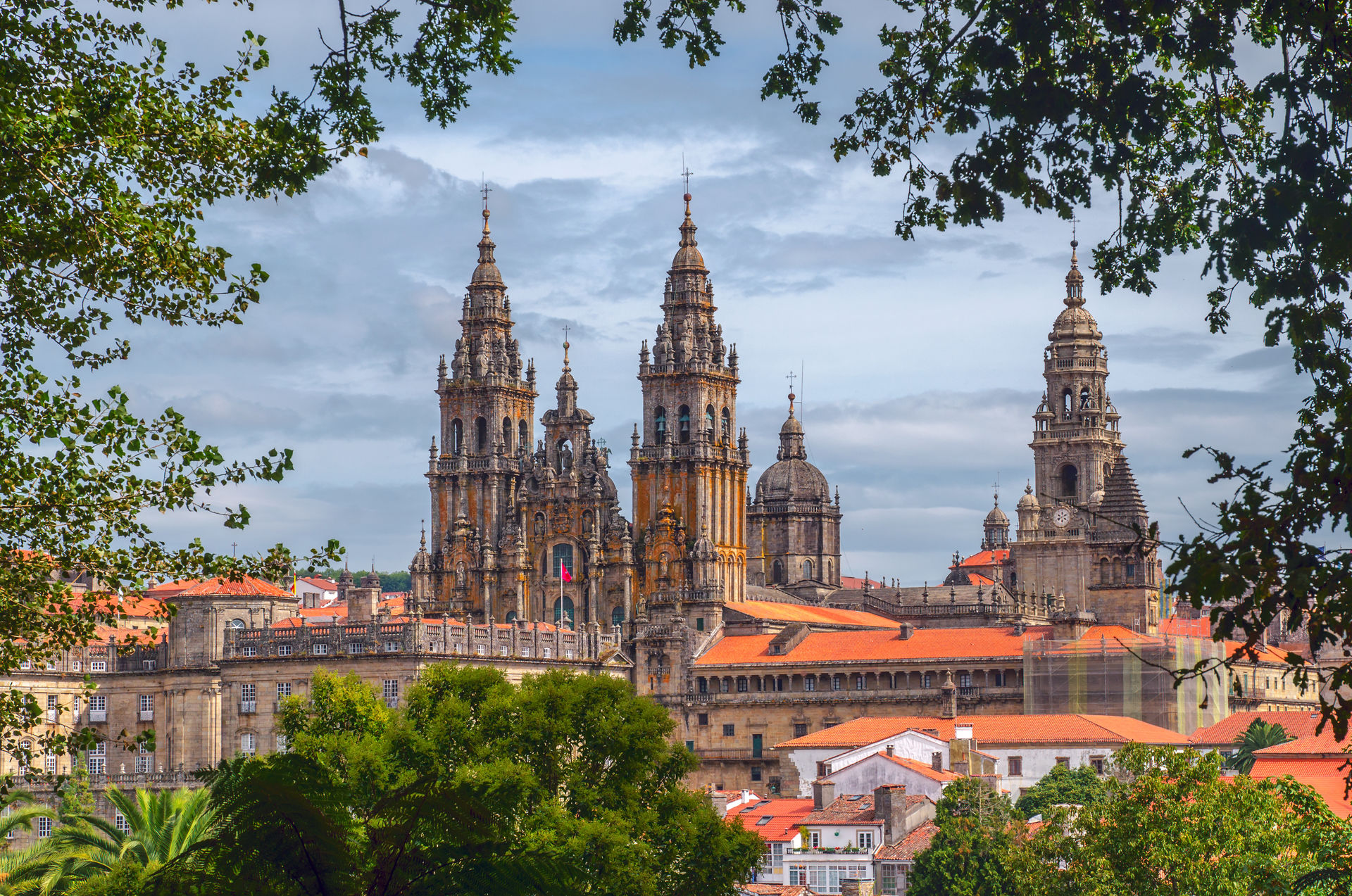
An impressive final scene as night falls at the longed-for destination, in front of the cathedral of Santiago de Compostela, which houses the tomb of St James. Young pilgrims rest on the bare paving, heads on their rucksacks, gazing dreamily towards the sky, unimpressed by the vibrant life that is raging in the bodegas and tapas bars of the old town.