


Prague Cultural Kaleidoscope Don Giovanni & The Magic Flute
Insiders love the beginning of the year, as it allows them to explore the city on the Vltava in peace, away from the otherwise never-ending streams of tourists. During this magical time of year, the traditional “Prague Cultural Kaleidoscope” takes place for the 44th time in 2027. We would like to celebrate this with you and, together with Prague's theatres, have put together an attractive programme for you.
Dates and prices



- 2027

| 17.03. - 21.03.2027 | Mi. - So. | from CHF 2'350.- |

Day 1: Switzerland – Prague
Journey to Prague. After checking in, dinner awaits you at your hotel.
Day 2: Prague Old Town & concert
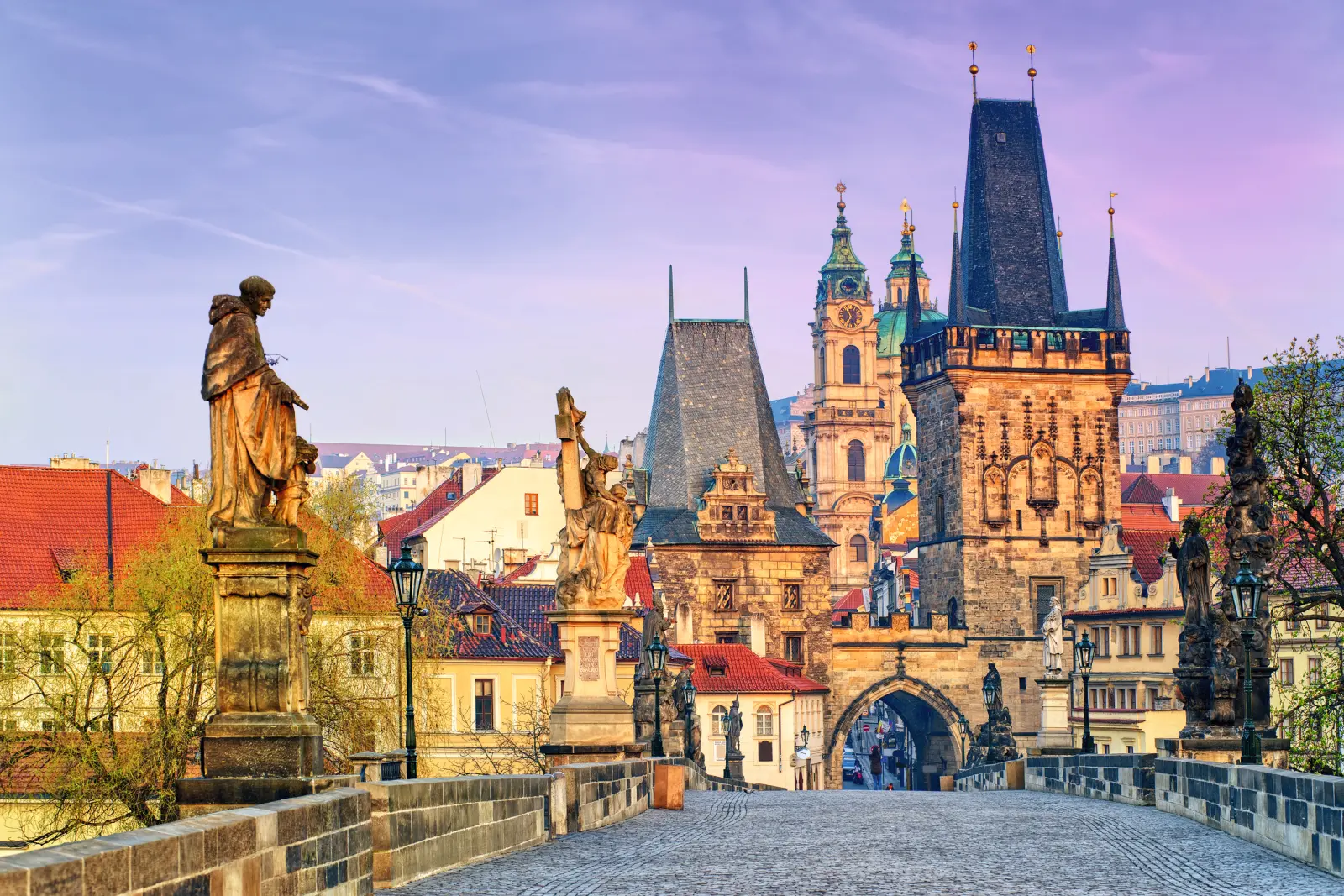
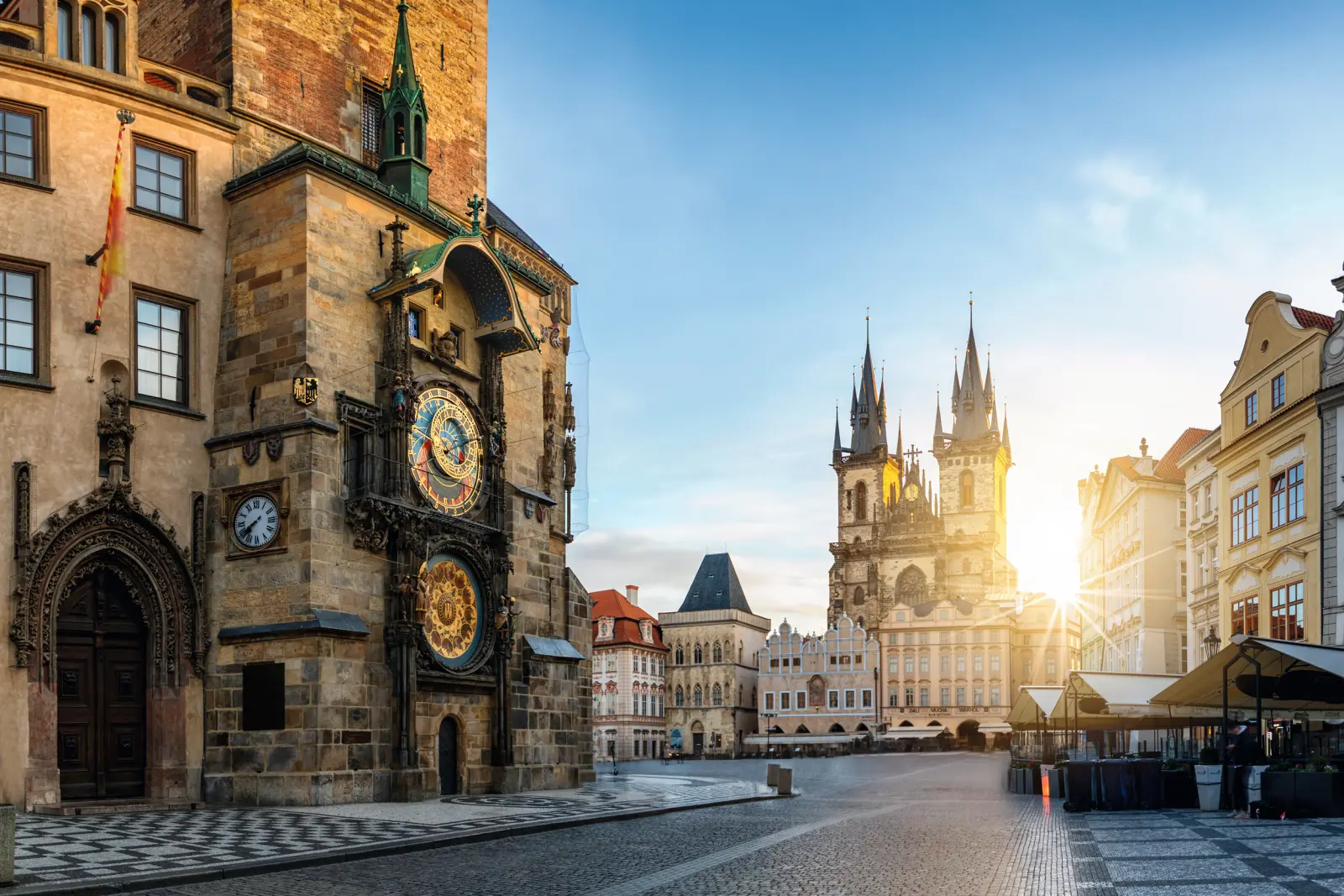
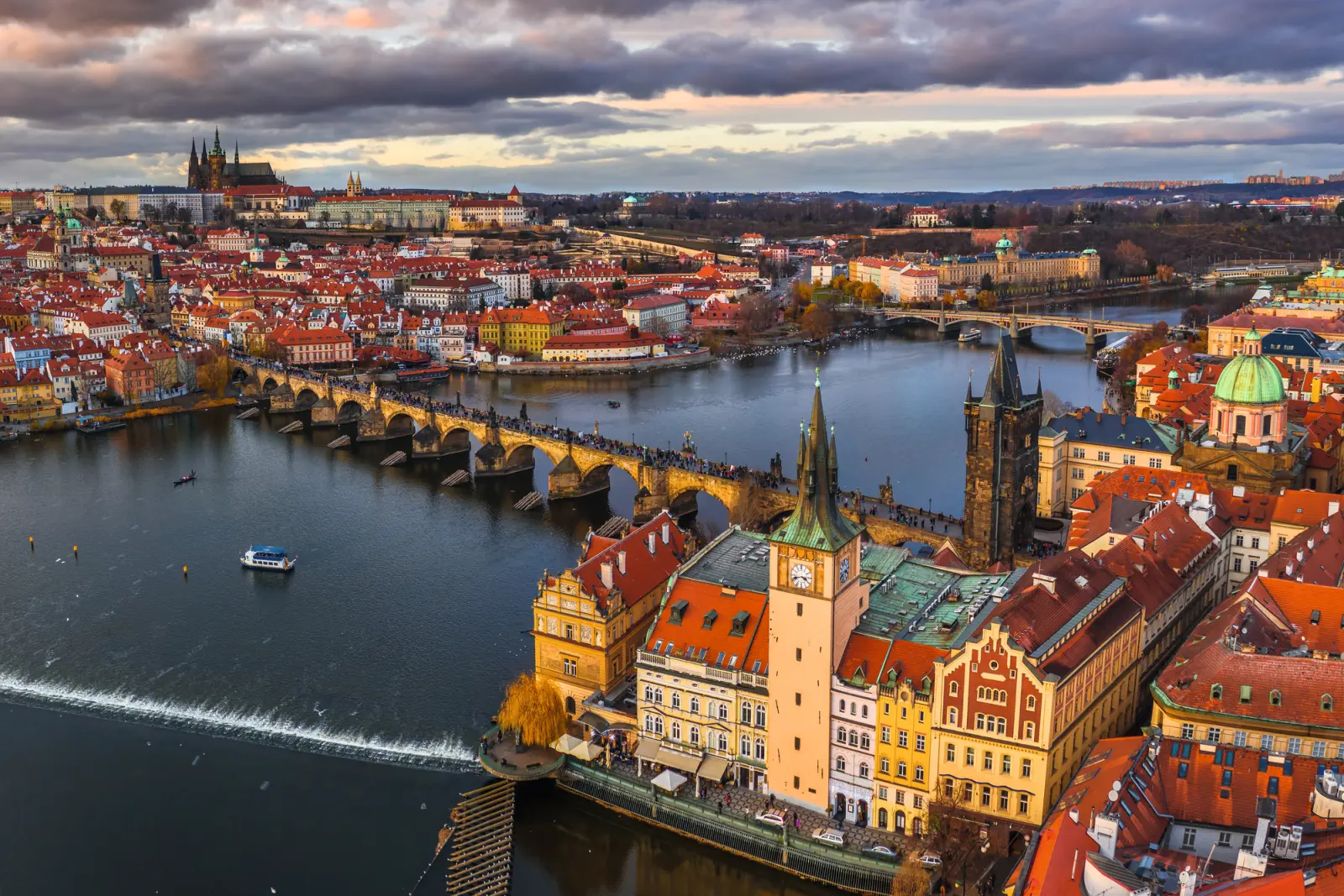
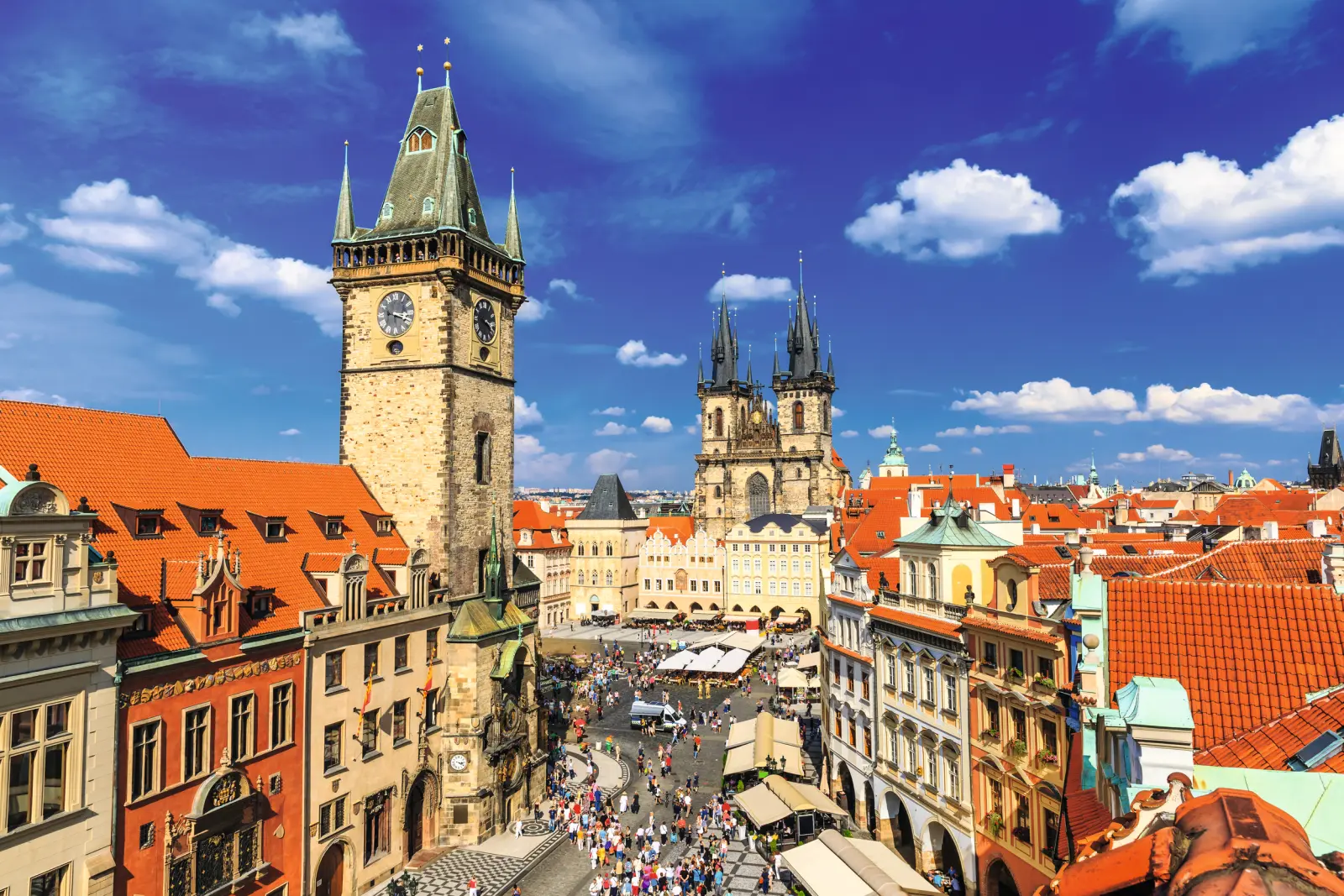
On today’s walking tour of the Old Town, you will discover the magnificent Art Nouveau façades on Pařížská Street, Old Town Square with the Town Hall and Astronomical Clock, Karlova Street, the Vltava promenade and Charles Bridge. The afternoon is at leisure. In the evening, enjoy a shared dinner including drinks at the hotel, followed by a concert in the Conservatory’s concert hall.
Day 3: Prague Castle & opera
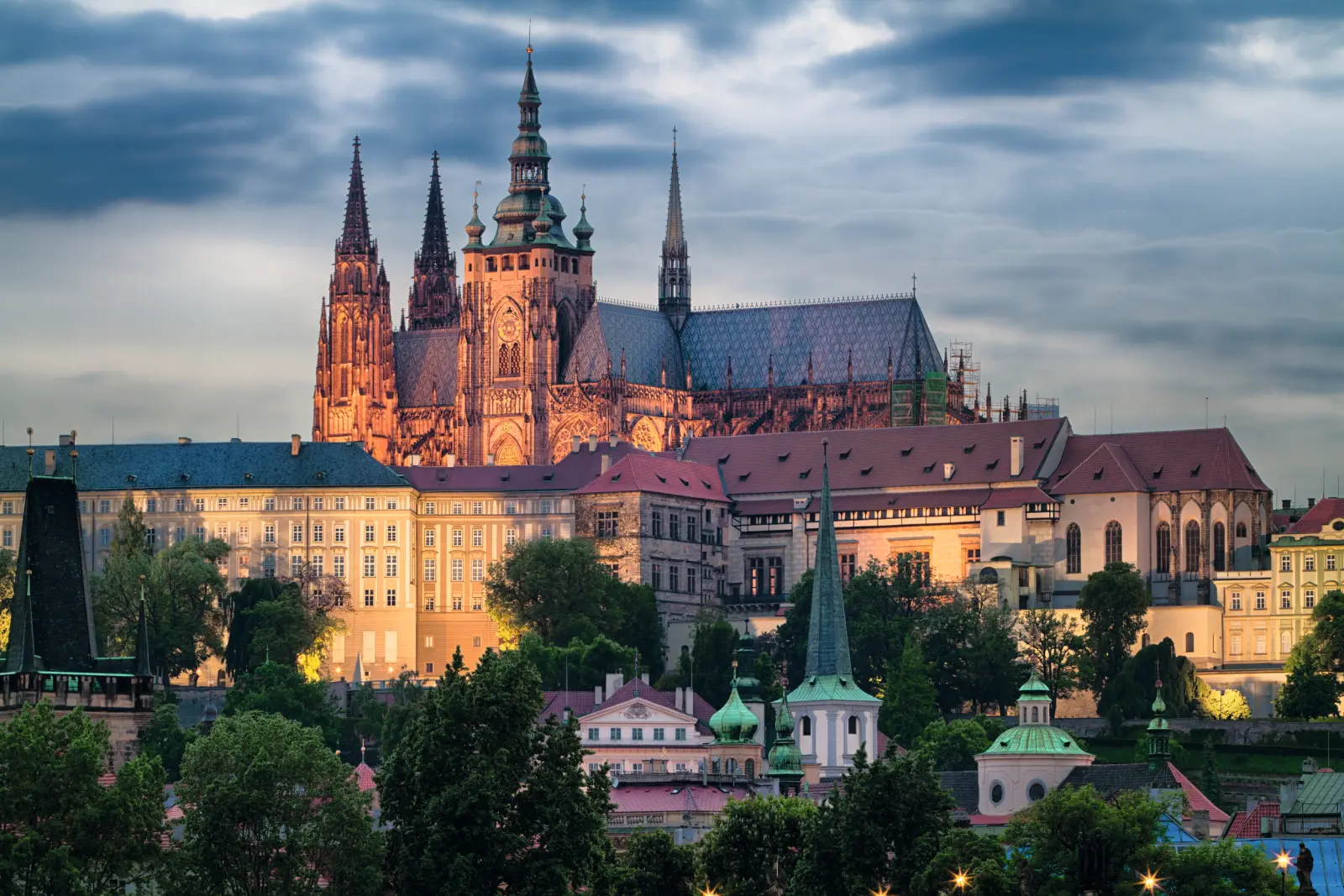
In the morning, enjoy a ride on a historic tram. On a guided tour, you will visit the most important sights on Prague Castle Hill, including St Vitus Cathedral, Vladislav Hall, Golden Lane, St George’s Basilica and Dalibor Tower. Free afternoon. Before the performance, an opera aperitif with delicacies from kitchen and cellar. Visit to the opera "Don Giovanni" at the legendary Estates Theatre.
Day 4: Prague Lesser Town & opera
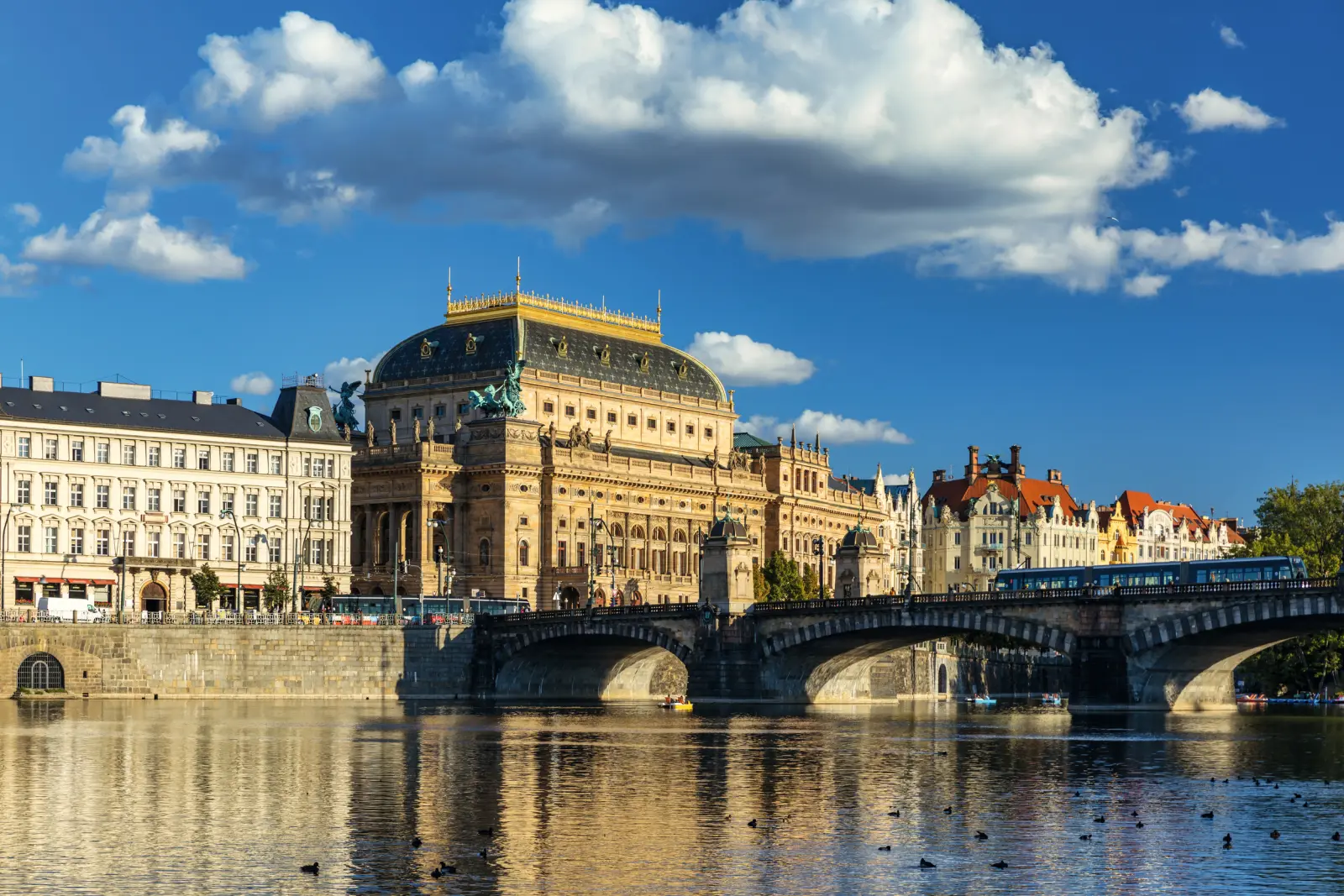
In the morning, you will explore the historic Lesser Town (Malá Strana), which has been preserved to this day in a surprisingly authentic form. As part of the city tour, you will visit the Baroque Church of St Nicholas. Afterwards, a shared lunch at the renowned Mlynec restaurant. The afternoon is at leisure. In the evening, you will attend the opera "The Magic Flute", again at the legendary Estates Theatre.
Day 5: Prague - Switzerland
Return journey to Switzerland.
CarRouge
Die Premium Fahrzeuge sind auf dem neusten Stand der Technik und verfügen über grosszügige Platzverhältnisse: 3 Luxussitze pro Reihe, individuell verstellbare Kopfstützen und eine Innenhöhe von 2.10 m sorgen für ein einzigartiges Raumgefühl.
- 30 breite, luxuriöse Premium-Fauteuils in 2+1-Bestuhlung
- Grosszügiger Sitzabstand von 90 cm
- Sicherheitsgurten an jedem Sitzplatz
- Höhenverstellbarer Fussraster, verstellbare Rücken- und Armlehnen
- Einzigartiges Raumgefühl dank 2.10 Meter Innenhöhe
- Mehrkanal-Tonanlage an jedem Sitz, Spurassistent und Abstandtempomat
- Gratis WLAN/Internet in Europa


360° Panorama
INCLUDED
- Travel by Car Rouge, 2+1 seating
- Music tour manager from/to Switzerland
- Accommodation in a carefully selected 5* hotel
- 4 x bed and breakfast (room with breakfast buffet)
- 2 x dinner including drinks
- 1 x lunch including drinks
- 1 x opera aperitif with wine and canapés
- 3 x tickets in the 1st category
- Guided tour of Prague’s Old Town
- Guided tour of Prague Castle including admission
- Ride on a historic tram
- Car Rouge audio system
Hotels
You will stay in the heart of Prague’s Old Town at the luxurious 5* Grand Hotel Bohemia.

Opera descriptions
Wolfgang Amadeus Mozart: “Don Giovanni” – Dramma giocoso
“Là ci darem la mano” – “Deh vieni alla finestra”
The model for the dramatisation is an old folk legend from Castile, the story of the lecherous Don Juan Tenorio. Mozart was already familiar with the contemporary musical setting by the Venetian Giuseppe Gazzaniga, as well as with Gluck’s ballet-pantomime. The libretto, entitled “Il dissoluto punito ossia il Don Giovanni” (The Rake Punished), is by Lorenzo da Ponte. Mozart’s cheerful drama was first performed on 29 October 1787 at the Count Nostitz National Theatre in Prague, under the direction of the composer.
It begins with a murder. “Il giovane cavaliere estremamente licensioso” (the extremely dissolute young nobleman) threatens Donna Anna, the fiancée of Don Ottavio. Her father, a knight of the order, steps in to protect her. In a sword fight, the “libertino” Don Giovanni (D.G.) mortally wounds the “commendatore” (knight commander). Don Ottavio swears revenge. Leporello describes his master’s life as that of a scoundrel: “La vita che menate è da briccone”. D.G. catches the scent of a young lady (“mi pare sentire odor di femmina”). Donna Elvira, the lady from Burgos, laments that her lover D.G. has abandoned her and curses him as “mostro, fellon, nido d’inganni!” She, too, swears revenge. In his catalogue aria, Leporello lists the 2,064 women D.G. has abandoned from Italy to Turkey. The peasant girl Zerlina and her bridegroom Masetto sing of love. D.G. wants to marry Zerlina on the spot: “Là ci darem la mano”. Donna Elvira objects: “Ah fuggi traditor”. Donna Anna tells Don Ottavio how her father met his death. “Dalla sua pace”: Don Ottavio’s own peace depends on hers. “Don Giovannino mio”, Leporello calls out affectionately to his master. In his champagne aria, D.G. calls for a dance – a “minuetto”, a “follia”, an “alemanna”. Masetto complains that Zerlina left him on their wedding day. She should just beat him: “Batti, batti, o bel Masetto la tua povera Zerlina!” At the ball, “maschere galanti” appear. Don Ottavio dances the minuet with Donna Anna; Don Giovanni a contredanse with Zerlina; Leporello with Masetto “un Balla la Teitsch” (a German dance).
D.G. needs women more than bread to eat and air to breathe. He slips into Leporello’s clothes. What does the servant make of it? “Mi par che abbiate un’anima di bronzo.” Dressed in D.G.’s clothes, Leporello charms Donna Elvira. D.G.’s canzonetta “Deh vieni alla finestra, o mio tesoro!” is also meant for her. Masetto wants to kill D.G. with a gun and a pistol. D.G. fights back and breaks Masetto’s bones and nerves: “mi ruppe l’ossa e i nervi!” Leporello reveals himself and begs for forgiveness: “Ah pietà di me!” In his aria “Il mio tesoro intanto”, Don Ottavio wants to avenge the murder of Donna Anna’s father. In the duet “Per queste tue manine”, Zerlina ties Leporello to a chair. Donna Elvira despairs over her fate as a betrayed soul: “Mi tradì quell’alma ingrata”.
In the graveyard, D.G. tells his servant of his latest conquests. Then the commendatore appears as a stone guest. Leporello addresses him: “O statua gentilissima del gran commendatore… benché di marmo siate.” Undaunted, D.G. asks the Commendatore: “Verrete a cena?” The statue nods. To table music with quotations from “Le Nozze di Figaro”, they drink a “Marzimino” and eat “un pezzo di fagiano” (pheasant). Donna Elvira urges D.G. to change his life (“che vita cangi”). He retorts triumphantly: “Vivan le femmine!” The stone guest knocks at the door. D.G. accepts his invitation. Amid flames, he is swallowed up by the earth. Joy reigns. Donna Elvira enters a convent, Zerlina and Masetto go off to feast, and Leporello to the inn. The moral of the story rings out from all six: “Questo è il fin di chi fa mal!”
Wolfgang Amadeus Mozart: “The Magic Flute”
Tamino: “This portrait is enchantingly beautiful”
The libretto is by the Hamlet actor and director Emanuel Schikaneder. The Egyptian settings were taken from the novel “Sethos” by Jean Terrasson, in the translation by Matthias Claudius. Mozart’s last opera was written between spring and September 1791. He conducted the premiere on 30 September at the Theater auf der Wieden in Vienna. A year later, theatre director Schikaneder was already able to schedule the 100th performance.
Prince Tamino, in hunting dress, is terrified of a serpent. Three ladies of the Queen of the Night slay the monster with their silver javelins. They admire the handsome youth. Papageno, with a bird cage on his back and a little faun’s flute in his hands, sings his entrance aria as the bird catcher. His mother is said to have served the “nightly, star-blazing queen”. For his birds, the Three Ladies give him sugar bread and sweet figs. He claims to have slain the serpent himself. So today he receives water, a stone and a golden padlock on his mouth. The Three Ladies give Tamino a picture of the queen’s daughter Pamina. His reply is the aria: “This portrait is enchantingly beautiful!” She has been abducted by a villain. The Queen of the Night laments the abduction in her coloratura aria: “Zum Leiden bin ich geboren”. In the quintet, the Three Ladies free the silenced Papageno from his padlock, hand him a glockenspiel and give Tamino a golden flute, which is to grant him omnipotence. The two are to seek out Sarastro’s castle, to which three boys show the way.
Scene change. In an Egyptian chamber, three slaves make merry over the cruel Moor Monostatos and Pamina’s escape; she reminds him of Sarastro, who has had her put in chains. Papageno recognises her by the portrait around her neck. In the duet “Bei Männern, welche Liebe fühlen”, the two sing of love and its purpose: “Nothing is nobler than man and woman. Woman and man reach up to the divine.”
Scene change. Three temples – of wisdom, of reason, of nature. The three boys admonish Tamino: “This path leads you to your goal”. Two gates turn him away. An old priest opens the third gate: “Where are you heading, bold stranger?” Tamino hates Sarastro. The priest: “So a woman has bewitched you?” Pamina lives! Animals of every kind rush to the sound of the magic flute. Monostatos threatens with “bonds and ropes”. Papageno plays his glockenspiel: “That sounds so wonderful…” Sarastro’s entrance is accompanied by trumpets and timpani. Pamina tells of the importunate Monostatos. The ruler of the Temple of the Sun does not wish to force her to love, yet will not grant her freedom either. The couple Pamina and Tamino are led to the Temple of Trials.
The 20-year-old prince is to unite virtue, discretion and charity within himself. Sarastro calls upon Isis and Osiris to strengthen the couple with patience in times of danger.
Scene change. In the forecourt of the temple, Papageno and Tamino are frightened by claps of thunder. His goal: “May the teaching of wisdom be my victory; Pamina, the sweet girl, my reward.” Papageno is already content with sleep, food, drink and a pretty little wife. The second priest promises him “Pa-pa-pagena”. The three ladies see the two lost in Sarastro’s hands and plunge through the trapdoor.
Scene change. Pamina in the middle of a grove. The Queen admits her powerlessness. Pamina’s father once handed the sevenfold circle of the sun to Sarastro. The Queen demands that her daughter kill Sarastro with the “steel” in order to win back the circle of the sun: “Der Hölle Rache kocht in meinem Herzen”. Pamina is to love Monostatos! Sarastro’s consolation: “In diesen heil’gen Hallen kennt man die Rache nicht”.
Scene change. A flying machine on stage. Papagena, as an old woman (18 years and 2 minutes), courts Papageno, who is 10 years her senior. Pamina meets Tamino. He remains silent. She sings: “Ah, I feel it, it has vanished”.
Scene change: the vaults of the pyramids. Chorus of priests: “O Isis und Osiris”. Papageno, light-hearted: “A girl or a little wife is what Papageno wishes for!” She is transformed into a young woman. In the garden, the three boys foretell: “Soon, to herald the morning, the sun will shine on its golden path”. Pamina wants to stab herself out of grief.
Scene change: two great mountains with a waterfall and fire-breathers.
Pamina and Tamino are united: “By the power of music we walk joyfully through death’s dark night!” Papagena and Papageno find each other too.
Scene change: the theatre as the sun. Monostatos, the Queen and her ladies sink from view. Sarastro proclaims: “The rays of the sun drive away the night and destroy the hypocrites’ ill-gotten power”.
The chorus of priests thanks Isis and Osiris: “Strength has triumphed and, as its reward, crowns beauty and wisdom with an everlasting crown!”