




South Tyrol – full of delights and zest for life
This report was produced in cooperation with our partner Schweizer Familie. Original article «Abstecher auf die Sonnenterrasse» published in: «Schweizer Familie» 24, 2022.
Text: Markus Schmid / Schweizer Familie
Photos: Philipp Rohner / Schweizer Familie
As if the climate border lay at the saddle of the Ofen Pass, the weather changes that abruptly. Dense drizzle from low-lying clouds had spoiled the mood of photographer Philipp Rohner and me on the drive through the wildly romantic Lower Engadin. But now a mild spring sun greets us in the Val Müstair, making the valley seem even lovelier. The Alpine ridges that hemmed in the valley closely on the other side of the pass recede, as if wanting to make room for the little villages amid lush green meadows. We are on our way to South Tyrol. But first we stop at Müstair Monastery, which Charlemagne is said to have founded in the year 775 in thanks for being saved from a snowstorm on the Umbrail Pass by heavenly intervention. Probably only the founding period is true, from which the wall paintings in the simple monastery church date. I am especially taken with the Romanesque frescoes. They are drastic comic strips from the Middle Ages, in which a Salome contorts herself in wild breakdance, dreadful hellhounds appear and a martyr is broken into four pieces.
National borders are the product of a capricious history. This is evident here at the transition to South Tyrol, just a stone's throw beyond Müstair: over the centuries, pretty much all of Europe's great powers fought over the land at the seam between north and south. The mostly bloody tug-of-war was won by Italy, which received South Tyrol from Austria as spoils of war after the First World War. It could have turned out differently, as the Vinschgau shows, this long valley on the upper reaches of the Adige. As in the Münstertal, Romansh was spoken here until the 17th century, and like it, the Vinschgau belonged to the Diocese of Chur until 1816. And just as with Müstair Monastery, the church lords in the Adige valley marked their territorial claim with Marienberg Monastery.
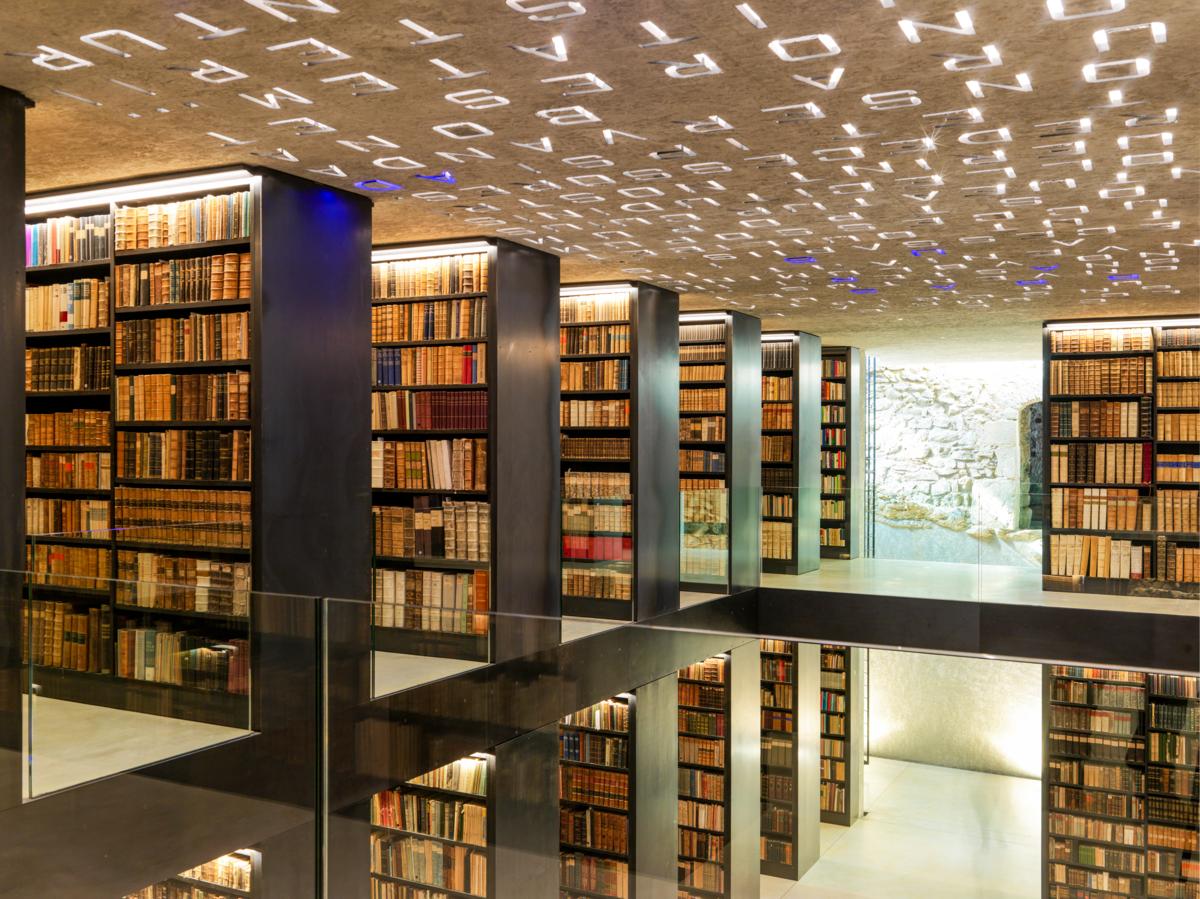
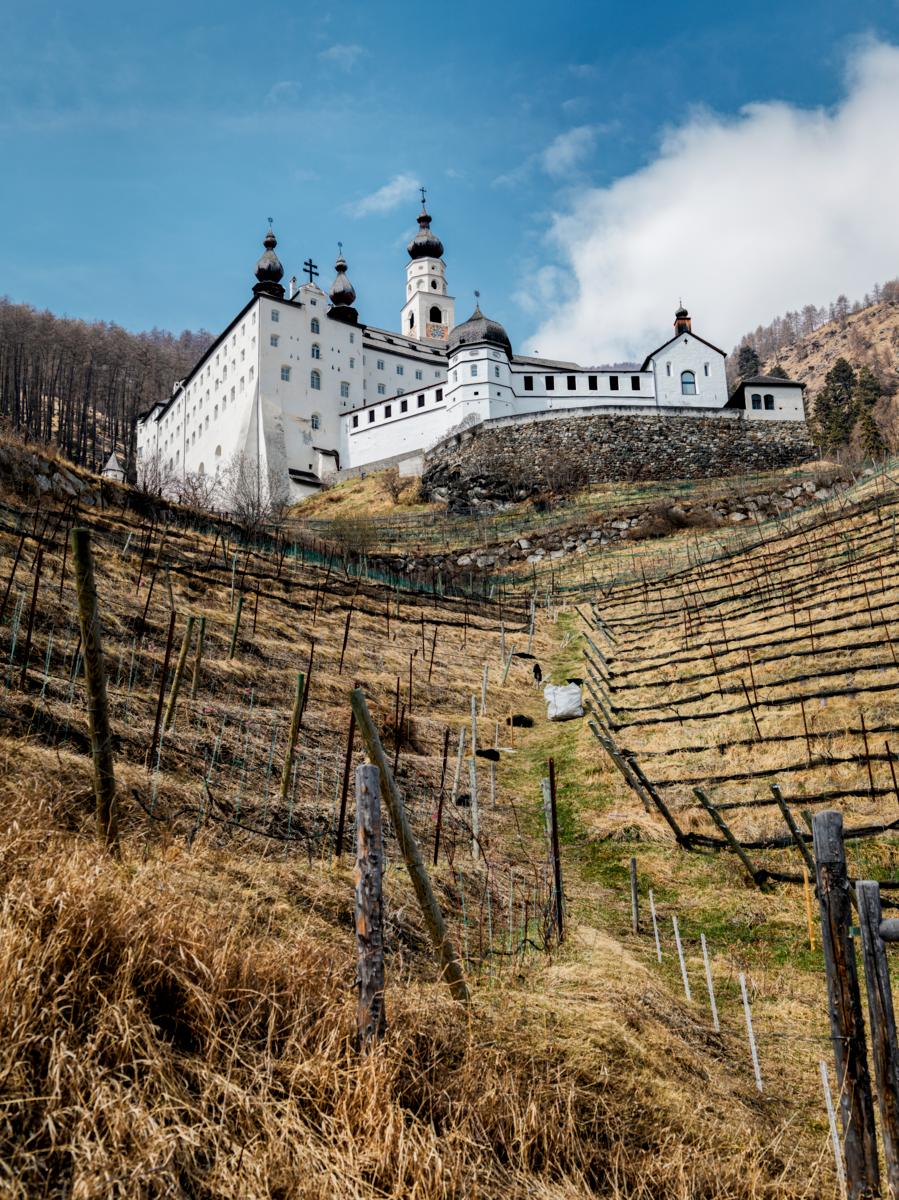
It is a massive fortress of God, gleaming far and wide from the mountainside. Yet: «The monks did not entrench themselves behind the monastery walls,» says Helene Dietl Laganda, who awaits us in the light-flooded courtyard, «but were connected to the valley.» The Benedictines taught the boys of the Vinschgau to read and write, but were not squeamish when it came to driving the barbaric Romansh out of their parents.
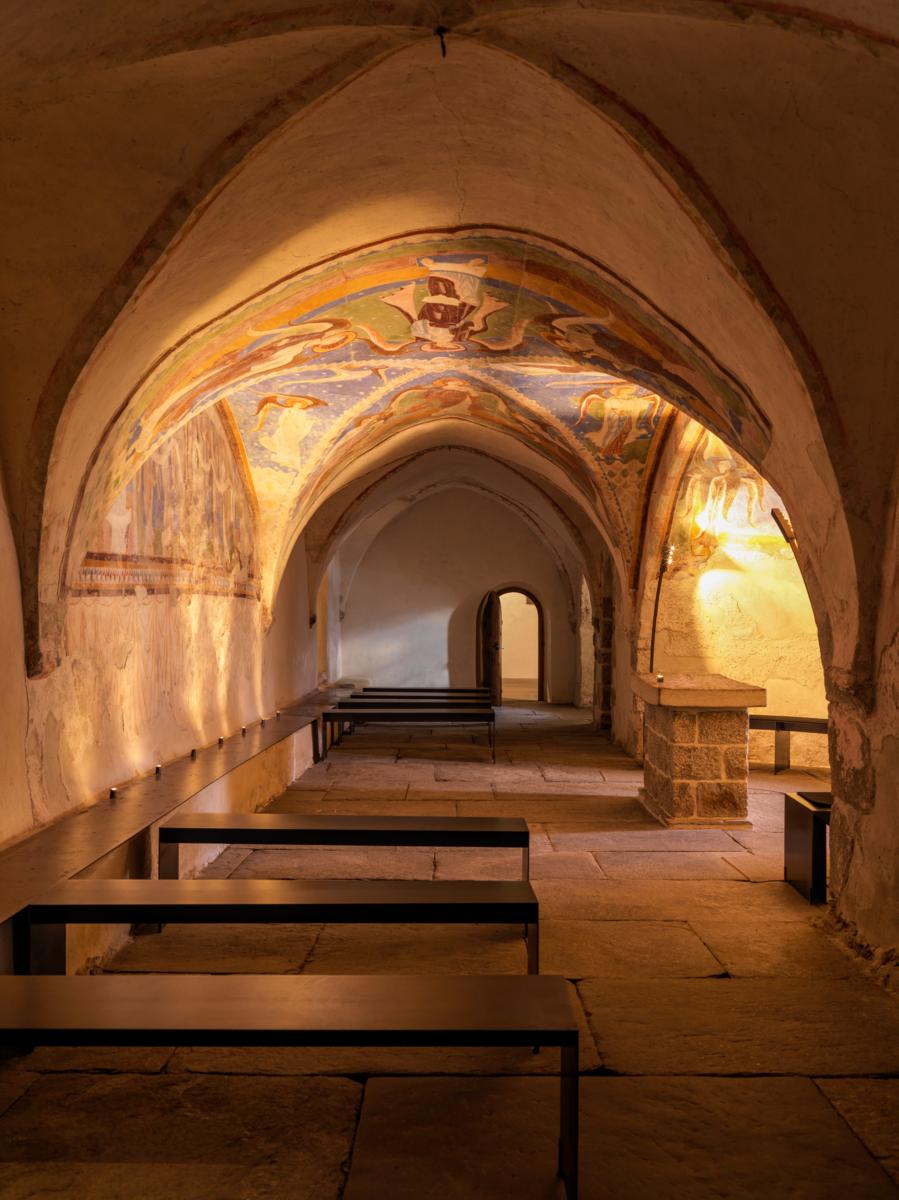
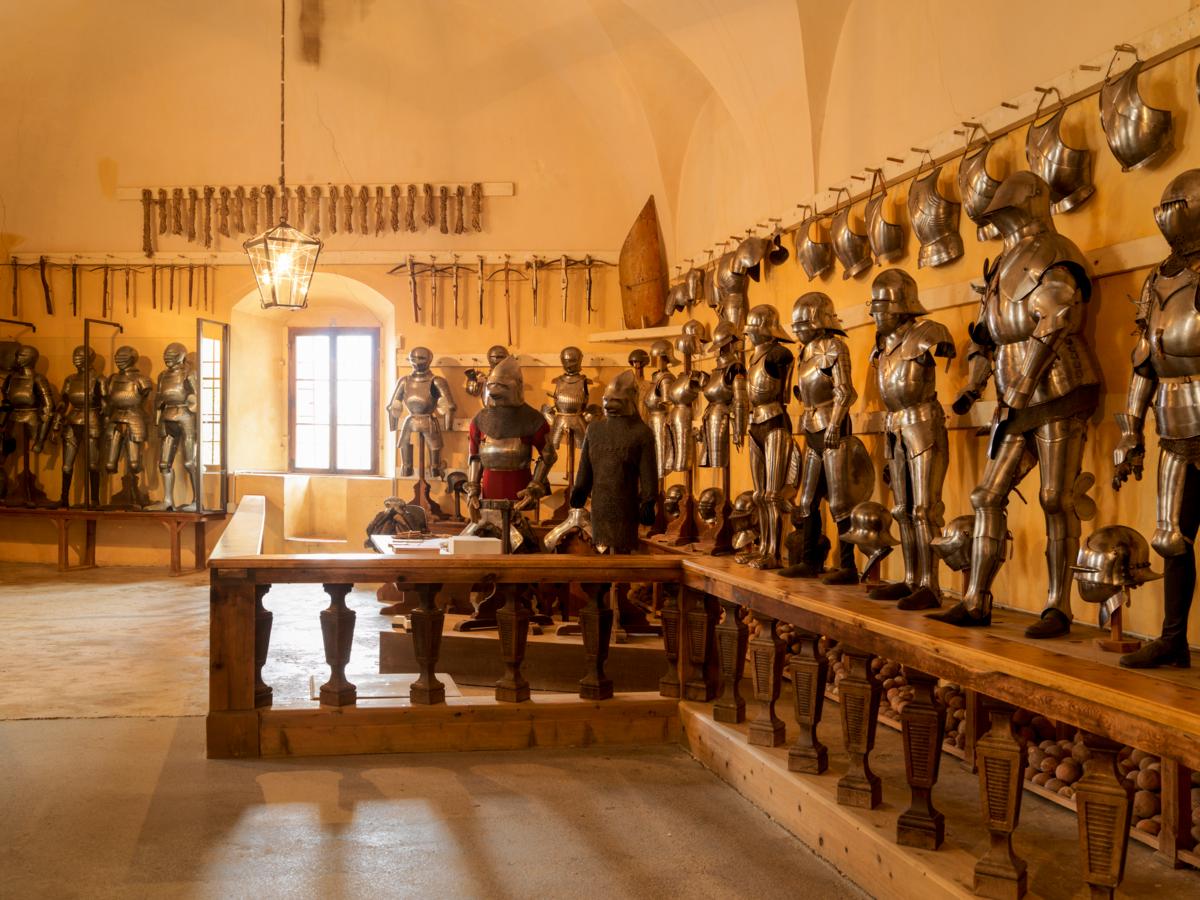
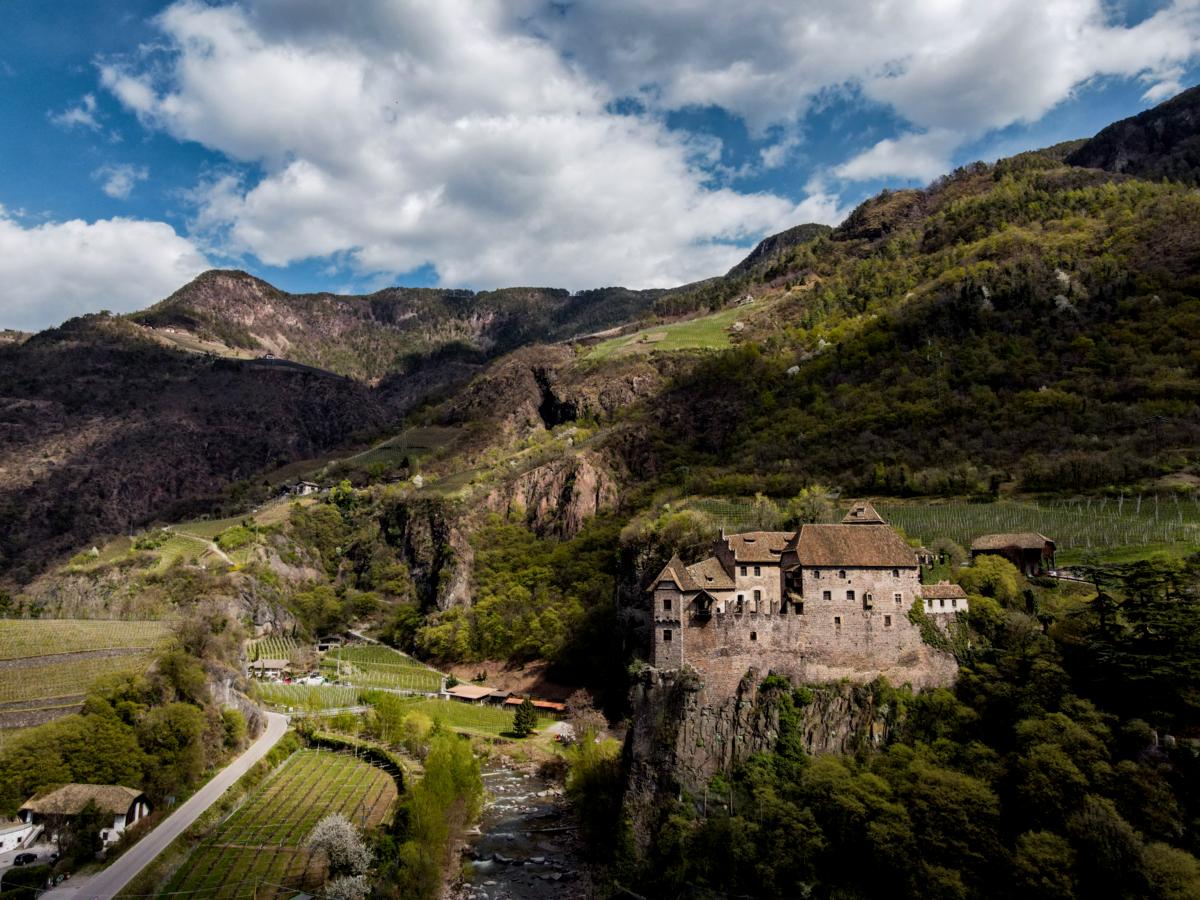
This monastery, too, harbours a unique treasure of frescoes. Solemnly, the art historian leads us into the 12th-century crypt, whose wall paintings are among the finest that the Romanesque period has to offer. A host of angels hovers around the viewer, their robes shining so brightly that they might have been freshly painted. «The intense blue,» Helene Dietl Laganda points out to us in the sky, «is made from Afghan lapis lazuli.» A mineral that was then as expensive as gold. Like pearls on a rosary, churches, chapels and monasteries line the old trade and pilgrimage routes. There is no village without these testimonies of deep piety and spiritual search for consolation, each a gem with wall paintings that depict scenes of the Christian faith as picture books in stone. Above them tower sturdy castles, whose owners lived well off the protective tolls on the busy trade and pilgrim roads. There are said to be at least 400 in South Tyrol, many so well preserved that they would make a fitting backdrop in any knight film. One of these picture-book castles is Churburg above Schluderns, a pretty village with winding lanes. Inside the Renaissance building, the artful design of the interiors and a playfully painted arcaded courtyard make you forget that the castle's former lords were considered particularly quarrelsome in the Middle Ages. You can get an inkling of this in the armoury of the lords of Matsch and the Trapp family, whose collection of masterfully decorated suits of armour is unique in Europe. One exhibit stands out in particular: the suit of armour, over two metres tall and weighing 45 kilos, of the giant Ulrich IX of Matsch, Captain of the Land of Tyrol in the 15th century.
A sea of pink and white blossom
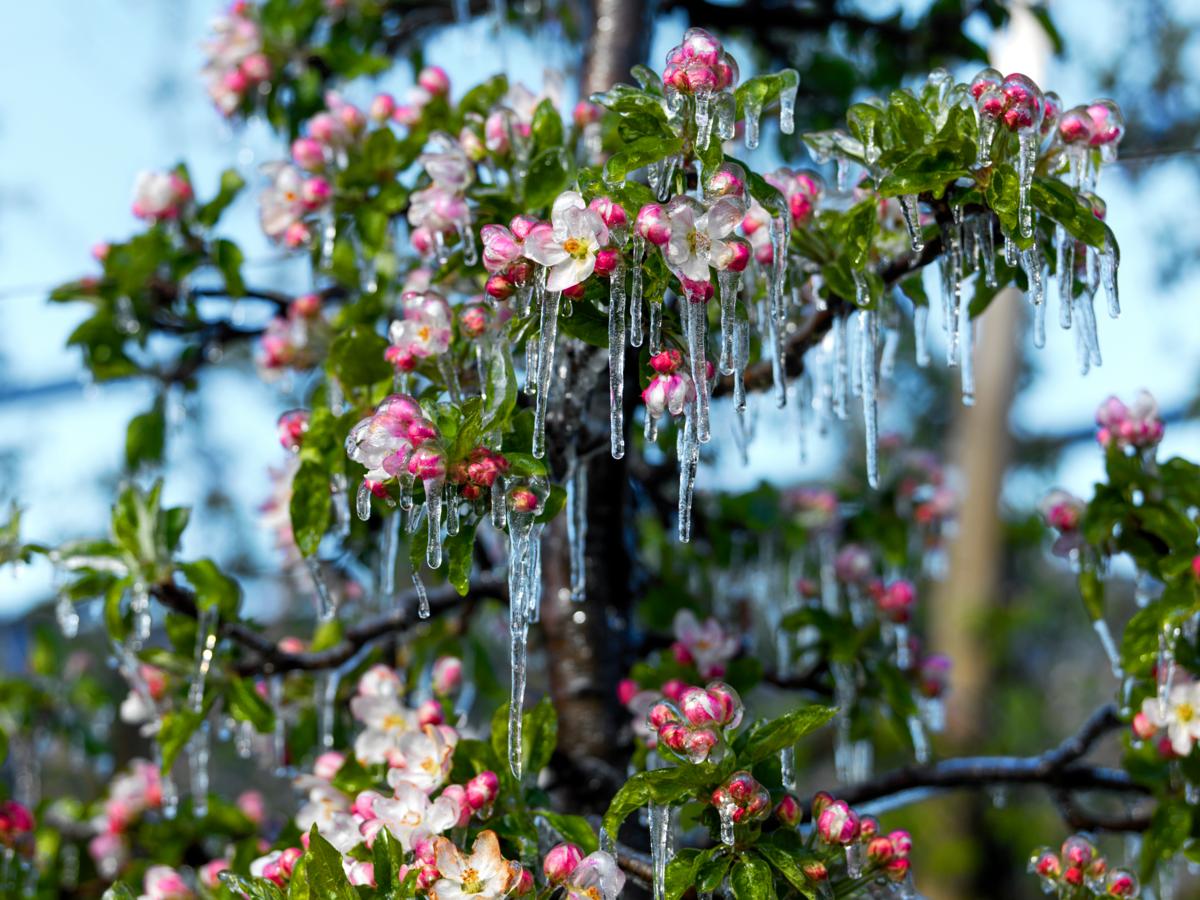
The turbulent times are fortunately over; contested county land has become peaceful apple country. In the broad high Alpine valley between the Ortler group and the Ötztal Alps, the fruit espaliers stretch far up the mountainsides. Ten per cent of the European harvest comes from this huge apple orchard, which turns into a sea of pink and white blossom in spring. In the 19th century, South Tyrol's paradise fruits were sought-after delicacies with melodious names such as Calville, Edelroter or Köstlichster, which grew on standard trees. These have disappeared, displaced by closely planted espalier trees. A region as dry as Sicily cannot afford rural romanticism. «Intensive cultivation is necessary,» says farmer Nadja Luggin. Nevertheless, the Luggins have chosen a different path. Anyone who finds the winding road to their Kandlwaalhof in Laas, world-famous for its marble, lands in the hustle and bustle of a genuine family business. In front of a barn, brother Joachim corks vinegar bottles, a gaggle of children romps across the courtyard while Nadja shows us the farm. On the former cattle farm, her father planted the first apple trees in the 1970s and decided to grow only organic fruit from then on, the 41-year-old tells us. In addition, there are Pala pears, apricots, cherries, strawberries, even mustard and mountain herbs. And because the fruit can match the glossy new varieties in taste, though not in looks, the Luggins prefer to process everything themselves.
The short drive from the Kandlwaalhof to Merano is like a leap from the rather barren mountain world into the exotic lushness of the south. Sheltered from the cold northern winds by the mountains of the Texel group, a Mediterranean and subtropical flora thrives here in numerous parks and gardens. Palms, agaves and eucalyptus populate the sunny slopes above the town and stand in charming contrast to the snow-capped three-thousand-metre peaks. With this blend of rock-solid permanence and southern flair, the town welcomes us with a cheerful serenity that is contagious.
On the banks of the Passer, the town's wildly foaming river, Café Darling beckons with its sun terrace. Johannes, the waiter with Austrian dialect and charm, brings coffee and enormous cream slices. And while Switzerland arms itself with raincoats against the grubby post-winter weather at this time of year, I stretch my legs contentedly in the mild temperatures and watch the passers-by stroll. Relaxation is, after all, the order of the day in a town that became one of the most popular spa resorts as early as the mid-18th century. The brightly gleaming Kurhaus, which dominates the riverside promenade as an elongated Art Nouveau building with playful columns, balconies and a large dome, recalls that time, when the high society of the Belle Époque met for their spa rendezvous in the fresh mountain air and mild climate.
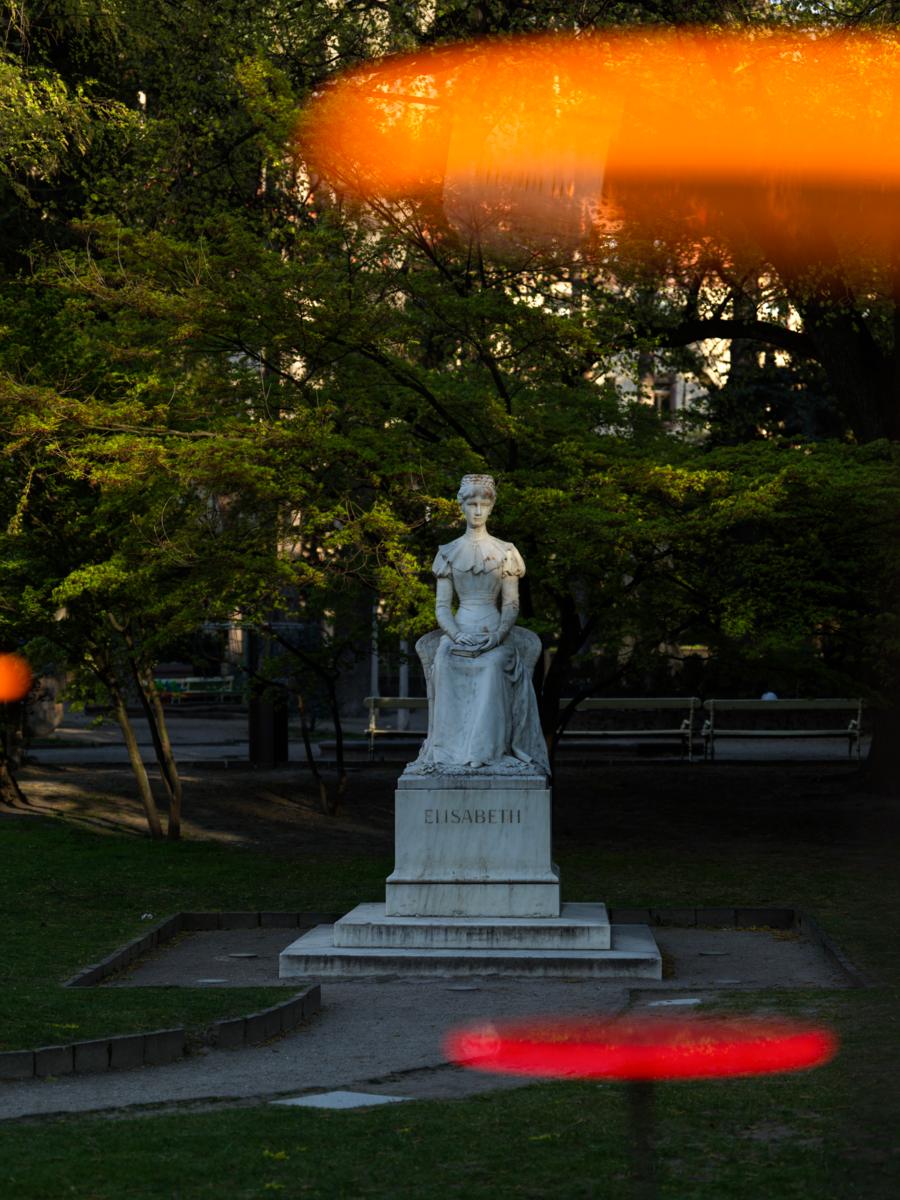
It was above all Sisi who recuperated in Merano at that time and thus ensured its career as a fashionable health resort. That is why there is not only a monument dedicated to her, in which the melancholy empress gazes lost in thought into the distance. A park, a restaurant and many ice cream creations recall Sisi. And a Sisi promenade leads from the monument out to Trauttmansdorff Castle, where she lived with her daughter. The splendid garden around the castle, however, was only opened in 2001, says Charlotte Jenny. The grounds are divided into four worlds, my guide explains, as we wander along winding paths, over steps and walkways, through the mixed forests of America, Asian bamboo groves and a miniature South Tyrolean landscape.
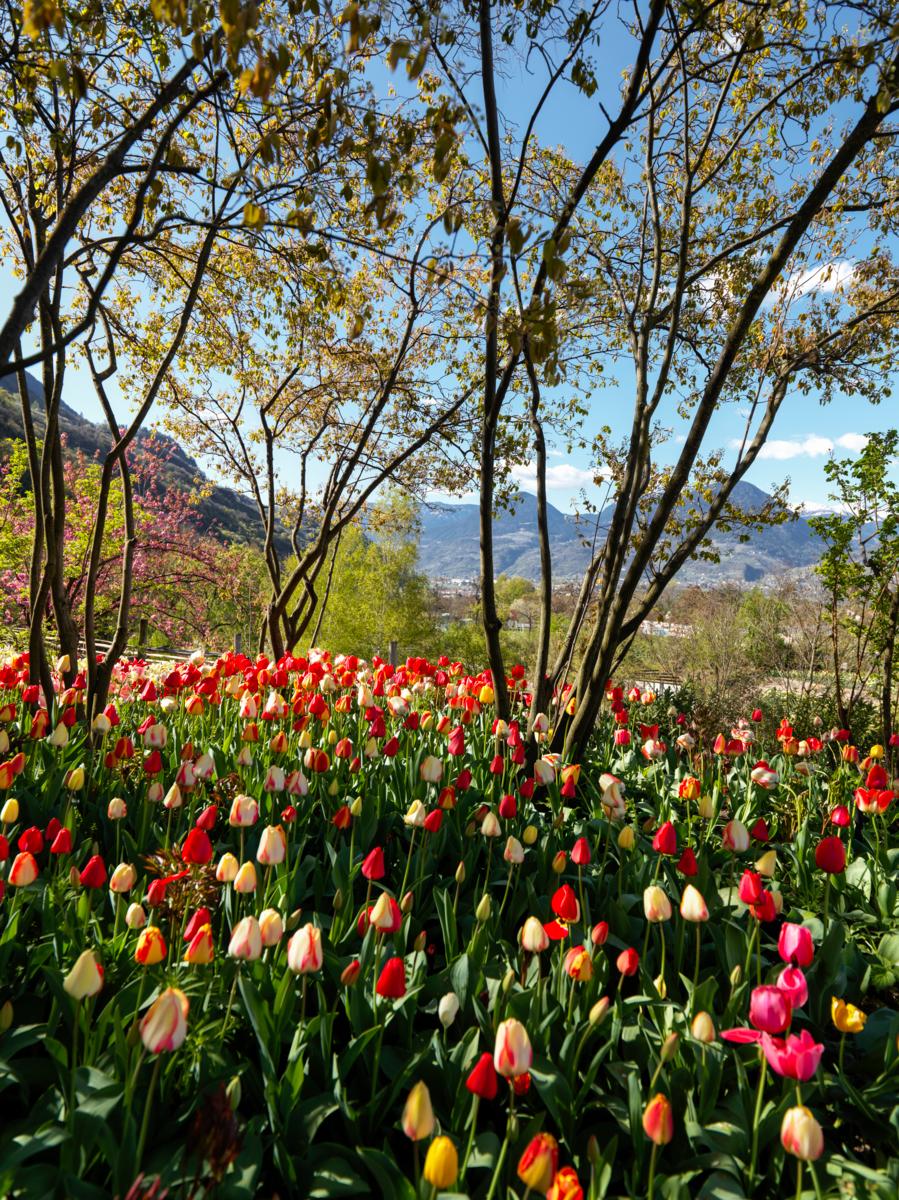
There is a tea plantation, a lavender field and a vineyard, a garden for lovers and a «Forbidden Garden» with poisonous herbs. «Those,» says the historian and garden lover with a wink, «mainly interest women.» Although it is still early in the year, tulips and daffodils cover the slopes with a colourful carpet of flowers, camellias add dabs of red, the first buds open on apple trees and Japanese ornamental cherries enchant with delicate pink blossoms.
Merano changed several times
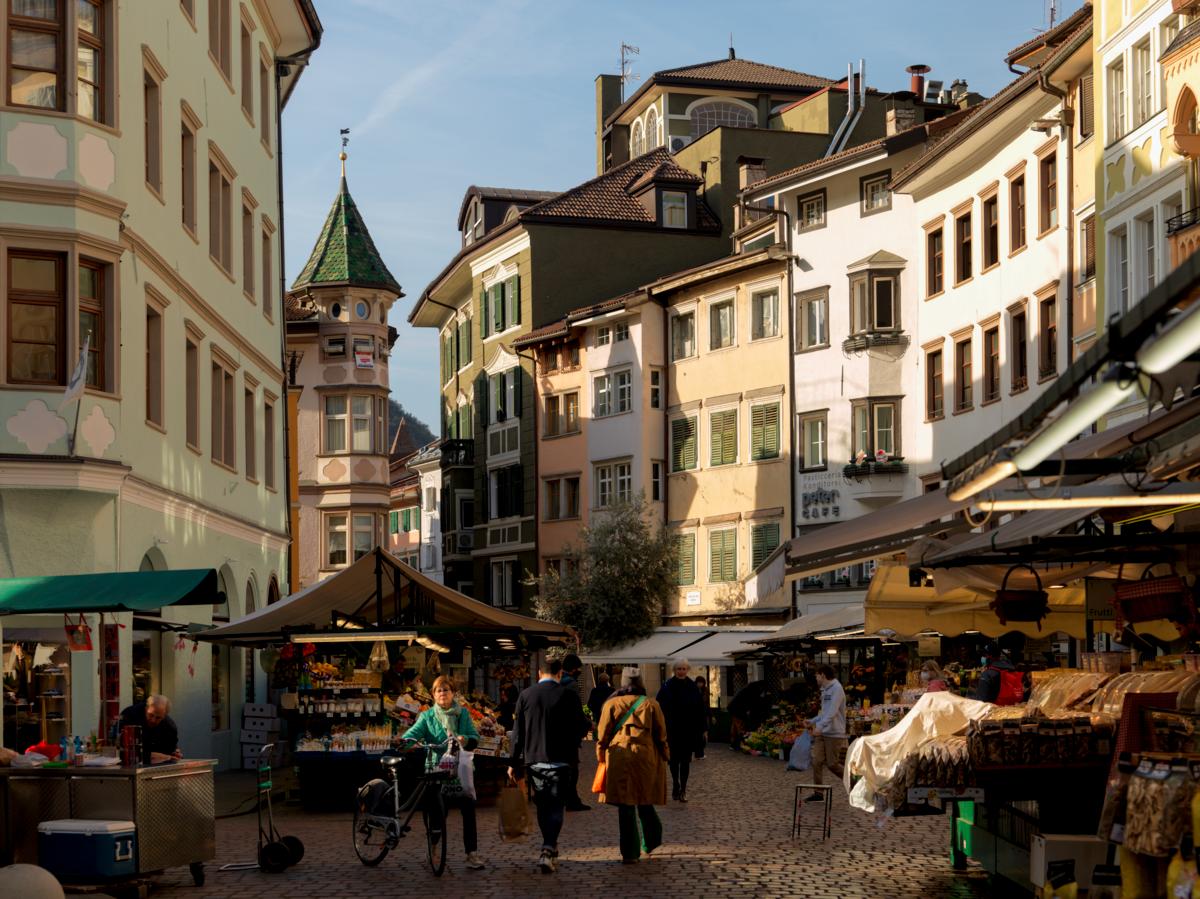
With so much glamour, you could almost overlook Merano's first career as the capital of Tyrol. Just as the Counts of Tyrol, whose residence with its keep watches over Merano, had planned. As a nucleus, in the 13th century they therefore had a lane of houses with arcades built for merchants and craftsmen. The plan succeeded: Merano became the capital of the county and a trading town. Then in 1420 Innsbruck became the royal seat, Merano lost importance, and the arcade shops were used as cattle sheds. After its revival from «cow town to spa town», the Laubengasse today presents itself as a shopping mile with elegant delicatessens, cafés and boutiques. In the evening the busy lane falls quiet, and peace returns to the spa town.
Exquisite white wines with lively acidity
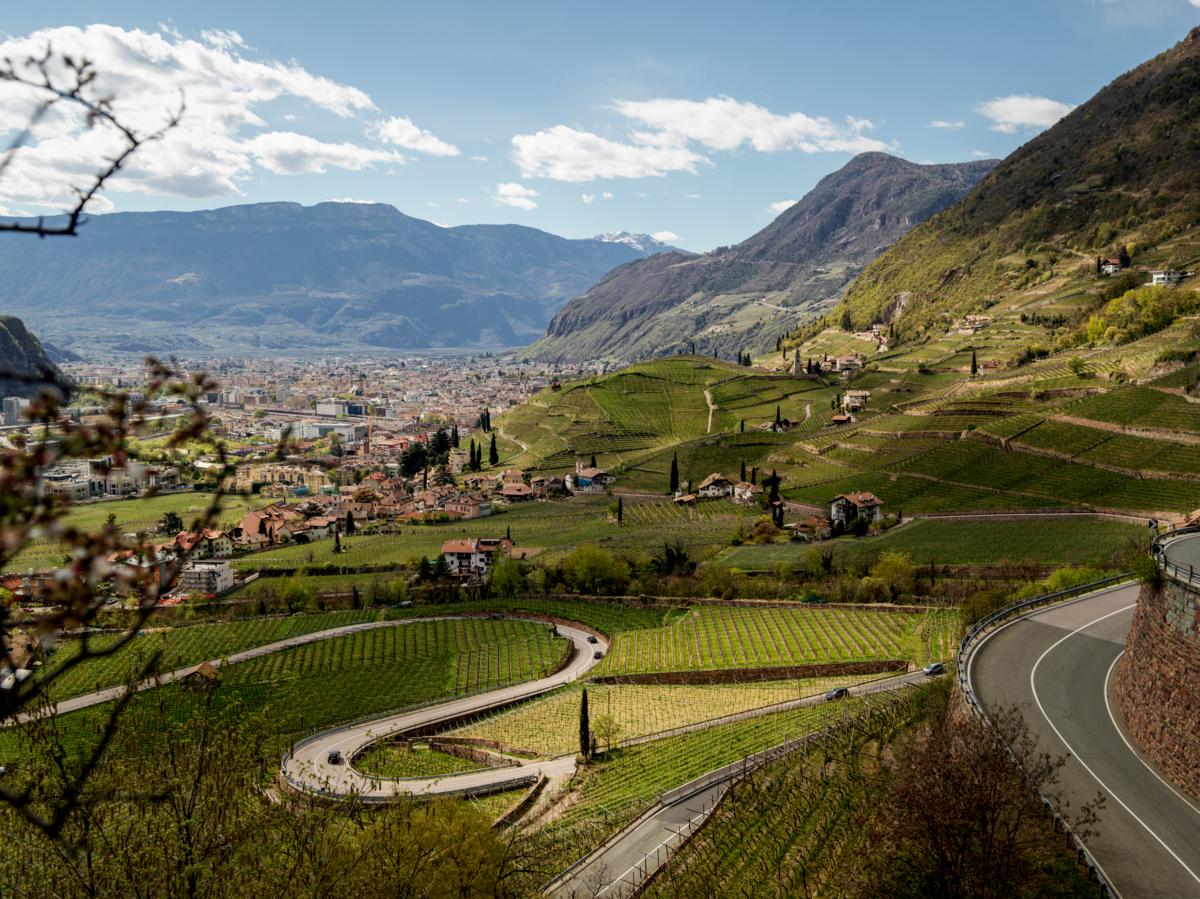
South of Merano a lush valley basin opens up, the high mountains soften into hills, and instead of fruit trees, vines grow up the sunny slopes here. I think of South Tyrolean wines that used to be served from litre bottles. «That's true,» confirms Philipp Carli, «for a long time the motto was ‹quantity over quality›.» But that changed in the mid-1980s, assures the 32-year-old sommelier of the St. Michael winery in Eppan. Yield limits and modern winemaking methods now make top wines possible. What Carli pours into the glasses is a pleasure to taste. They are exquisite white wines with lively acidity, and even the red wines Lagrein and Vernatsch, once decried as plonk, have fullness and velvet.
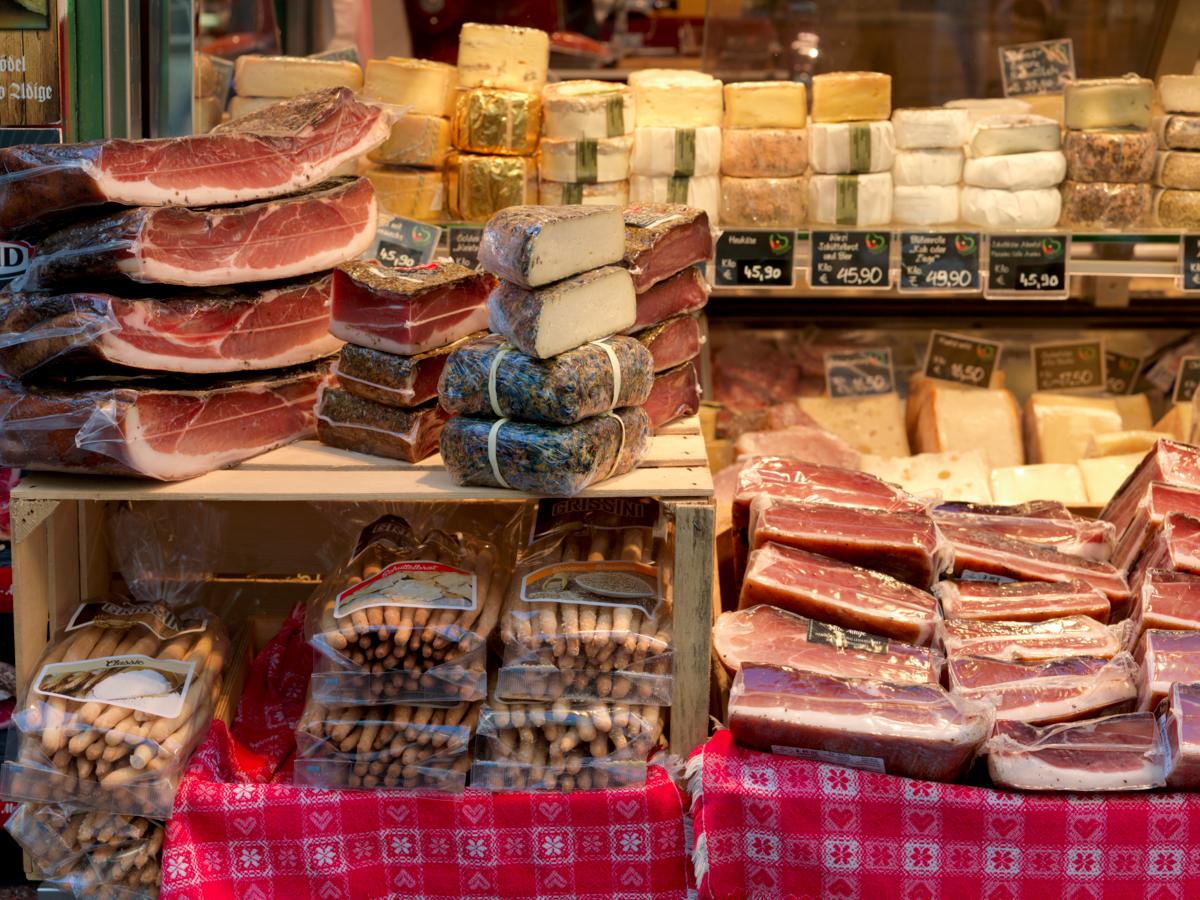
«Bolzano is paradise!» raves Cobo. And Cobo should know. The 73-year-old with the bushy moustache is actually called Rino Zullo and is the landlord of the cult venue Fischbänke in Bolzano. A bon vivant who has travelled the world. «We have what you need for life here: a great landscape, plenty of sun, fine food, good wines.» The physical pleasures are found around the corner at the market. Here fresh fruit and vegetables, spicy cheese and smoked bacon are piled high on the stalls. Trading in delicacies is part of the town. «At the intersection of the trade routes over the Brenner and Reschen, the Bishops of Trento had a market settlement established in the 12th century,» explains Elisabeth Tocca, my guide. Here too we stroll through a narrow lane with arcades. Italian and German-speaking traders worked peacefully side by side and together here at that time. Unlike in the post-war years, when South Tyrol was forcibly Italianised. «A dark chapter in history» is what Tocca calls this period.
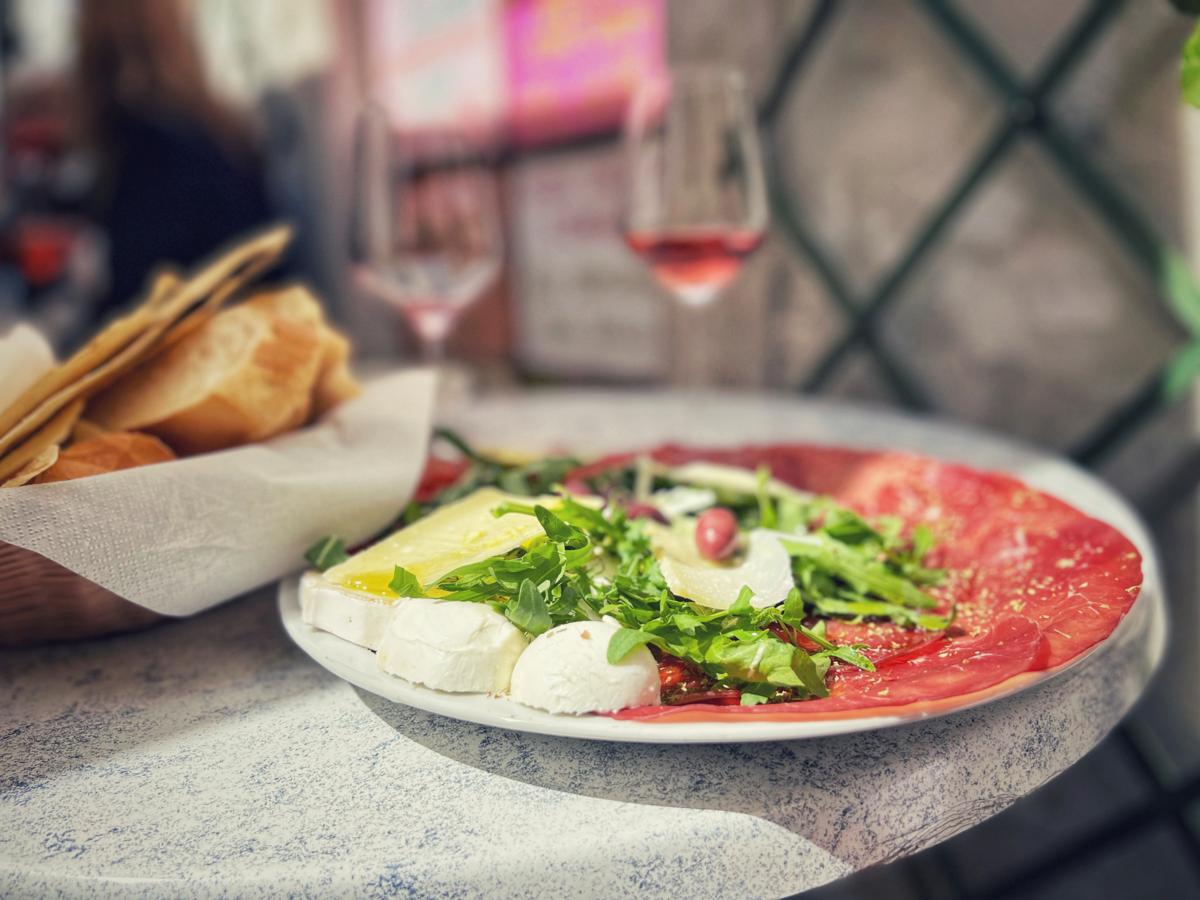
In 1972 South Tyrol became the Autonomous Province of Bolzano, with many special rights regulating the coexistence of the different language groups. Fortunately, I think, as we enjoy the mild spring evening at Cobo's «Fischbänke». In front of us a cool Chardonnay from the region, German and Italian are spoken beside us, and Cobo serves a platter of cold cuts with a «buon appetito». It is precisely this togetherness of German cosiness, Alpine charm and Italian lifestyle that makes this land between the Alpine world and the promise of the south unique.