






Floating Dreams – the North Frisian Halligen
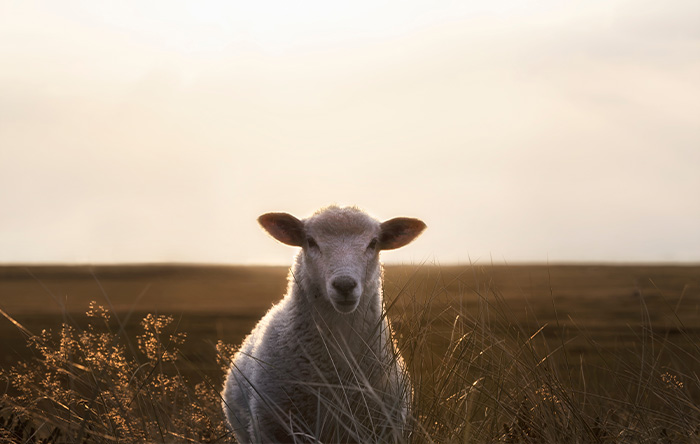
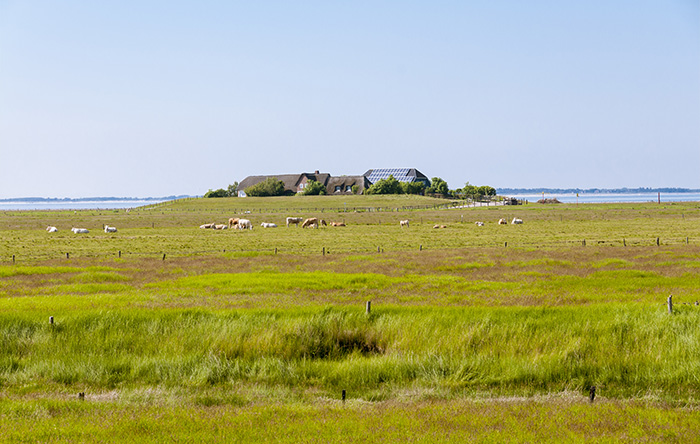
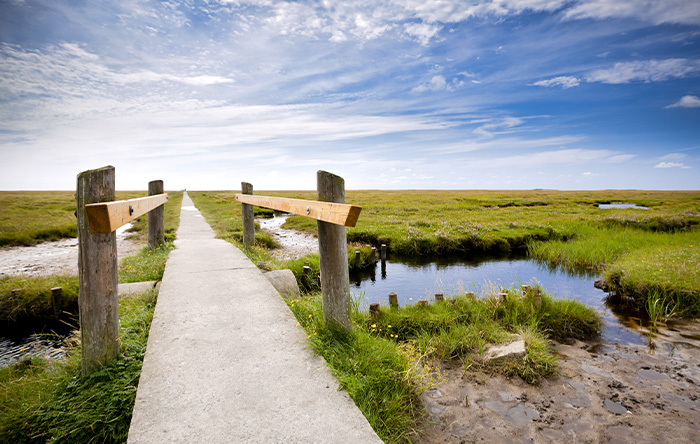
So it is no surprise that the region around the Wadden Sea is a UNESCO World Natural Heritage Site and that the islands, as a nature reserve, promote sustainable development in ecological, economic and social terms. Countless bird species, seals and also harbour porpoises raise their young here. On the so-called salt marshes, a habitat that forms the transition between land and sea, the most diverse plants grow. During exciting mudflat walks, a local guide from the nature park administration introduces visitors to the fauna and flora of the Halligen and shows them how important it is to preserve this habitat.
Living with the sea
But it is not only fauna and flora that captivate visitors. It is the people who make these islands so unique. They have long been used to living with nature, and most residents react calmly to the forces of nature. “Landunter [the Hallig being flooded] is completely normal for us; we grew up with it,” explains Helga Diederichsen, who runs the well-known Storm Surge Cinema on Hooge with her son. In a thunderstorm the Wadden Sea is deserted. And when a storm surge comes and reaches right into the house, you simply flee to the shelter room at the very top of the house. After all, you do live in the sea. If you ask whether they aren't afraid of the water, the residents of a Hallig only give you uncomprehending looks.
Living on a Hallig, at times completely cut off from the rest of the world by the water, does not mean the residents are lonely. Community and solidarity are very important. Here everyone knows everyone, and most have lived here since childhood. So do the sisters Hilke and Karen. They left the Hallig in their late teens to study, but both keep being drawn back. And not infrequently the charm of the Halligen and the special character of the locals persuade even strangers to stay. Renate Orthmann first came to Langeness in 1985, kept coming back ever since, until one day she simply stayed.
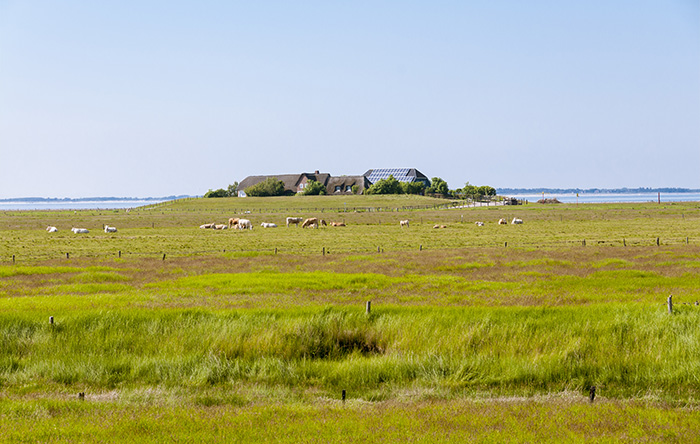
As one of the most beautiful Halligen, Hooge delights countless tourists every year. To hold back the power of the sea a little, Hallig Hooge is surrounded by a stone dyke – the only one of the Halligen to be. Hooge also has the largest Warft, which is at the same time the cultural centre of the Hallig and from where visitors can discover the island.
Nature lovers can find out about the Halligen biosphere at the Mensch & Watt (People & Mudflats) Experience Centre, view the exhibition with the tidal aquarium and the mudflat workshop, or visit the Wadden Sea itself and discover countless animal and plant species there. And who knows, perhaps treasure hunters will even be rewarded with the “gold of the North Sea” – amber.
A longing for the wide open landscape
After a leisurely stroll or a cultural outing, small cafés and restaurants invite you to linger and relax. A visit to the oldest inn on Hooge – the Friesenpesel – is an absolute must. The hungry are pampered not only with North Frisian specialities but also with a charming interior with original Dutch tiles more than 200 years old and a furnished parlour from 1746.
On the journey back, the longing already sets in. The longing for the wide open landscape and the smell of the sea. And you are already starting to plan the next trip to the island. There is something about it, somehow: you are always glad to return to the Halligen.
If the weather is for once less inviting, the various museums delight and offer a pleasant refuge from wind and weather. The absolute highlight on Hallig Hooge is a visit to the Storm Surge Cinema. On a large-format screen, a typical Landunter is presented in an impressive way. History enthusiasts stroll through the Königspesel in the footsteps of 18th-century seafarers, and art lovers can admire works by the master Ringeling in the 17th-century Hallig church.